The House Sat at Street Level: Drainage and Grading Findings on an Upper Valley Inspection
Odd swales out front, a driveway with almost no fall, a man-made low spot in back, and erosion on all four sides. Here is how drainage problems show up on an El Paso home inspection before any cracks do.
Written by John Raley, CMI — Certified Master Inspector · Texas Professional Real Estate Inspector · ICC Residential Building Inspector
Most of the foundation problems we document in El Paso started as water problems years earlier. This Upper Valley inspection is what that looks like before the damage shows up.
The home was built in 2007 and had no cracked brick, no sticking doors, and no sloping floors. What it had was a yard that had been moving water toward the house for years, and a detail that changed how we read everything else: the house sits at the level of the street.
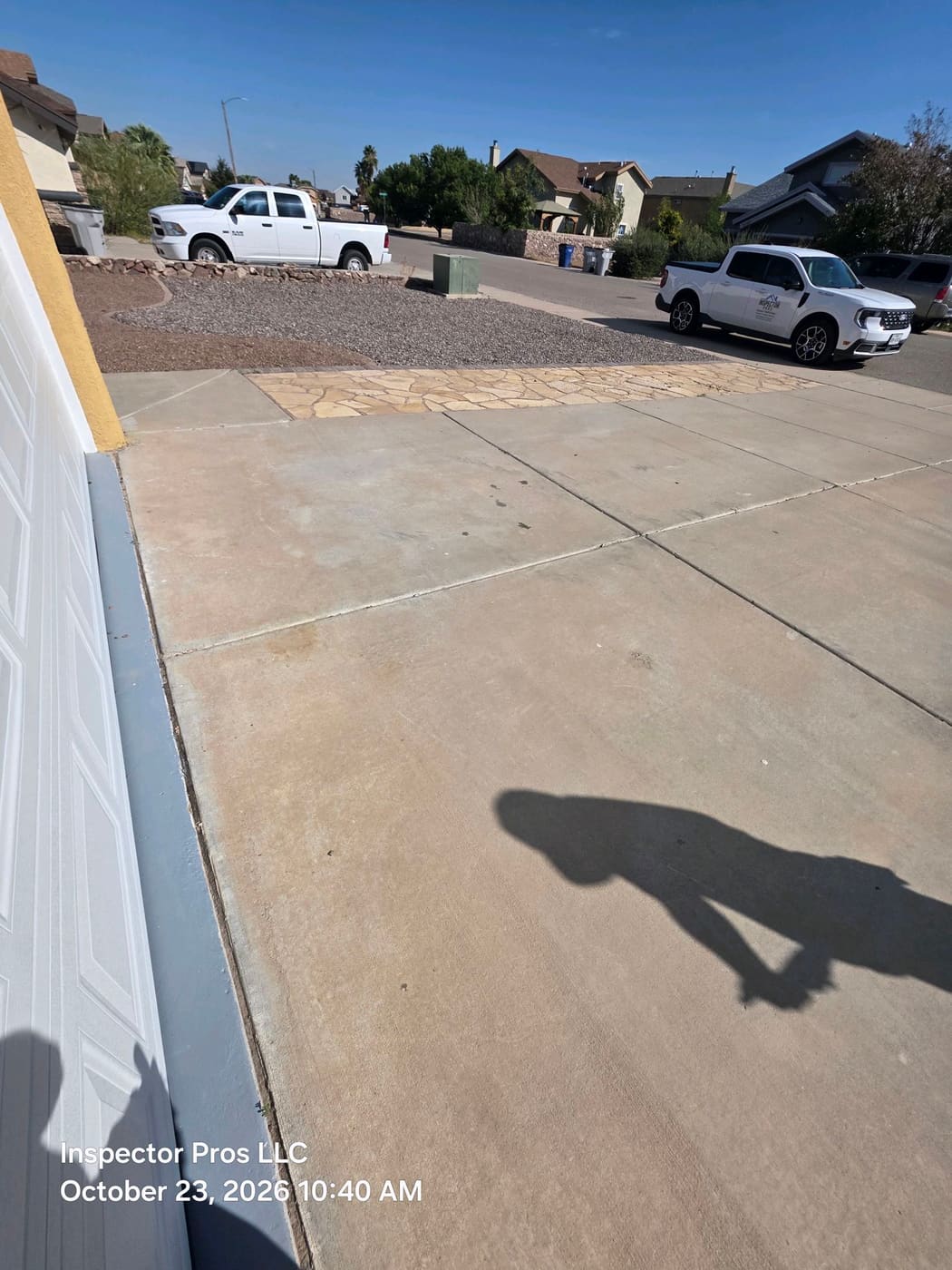
The driveway runs from the garage to the street with very little fall. The home sits at street level, so water that does not drain has nowhere else to go. Inspector Pros, October 23, 2026.
Later in the inspection the buyer walked across the street and talked to a neighbor, who said the area floods. That conversation turned a list of yard findings into a clear picture.
What We Noticed Out Front
The first thing that caught our attention was the shape of the front yard. A swale is a shallow channel built into a yard to carry water somewhere deliberately — away from the house, toward the street or a drainage easement. Properly built, a swale is invisible until it rains and then does exactly one job.
The swales here were unusual: shaped in ways that did not carry water cleanly off the lot, with no clear path to the street.
Then we checked the driveway. The ground next to a house should drop roughly six inches over the first ten feet away from the foundation. That slope is what moves rain away from the slab before it can soak in. This driveway did not have anywhere near that fall in its first ten feet.
On a lot that sits above the street, a shortfall like that is a maintenance item. On a lot level with the street, in an area that floods, water that does not leave has nowhere else to be.
The Low Spot in Back
In the back yard there was a man-made sunken area — a deliberately lowered section of the yard. Features like this are sometimes built to catch and hold runoff, and that can be legitimate when it is sized, lined, and drained on purpose.
This one was holding water in the wrong place: close enough to the structure that it was contributing to the saturation we were already seeing elsewhere, with no visible outlet to carry water away once it collected.
Then We Walked the Perimeter
This is where the inspection stopped being about individual findings and started being about a pattern. There was erosion on all four sides of the home.
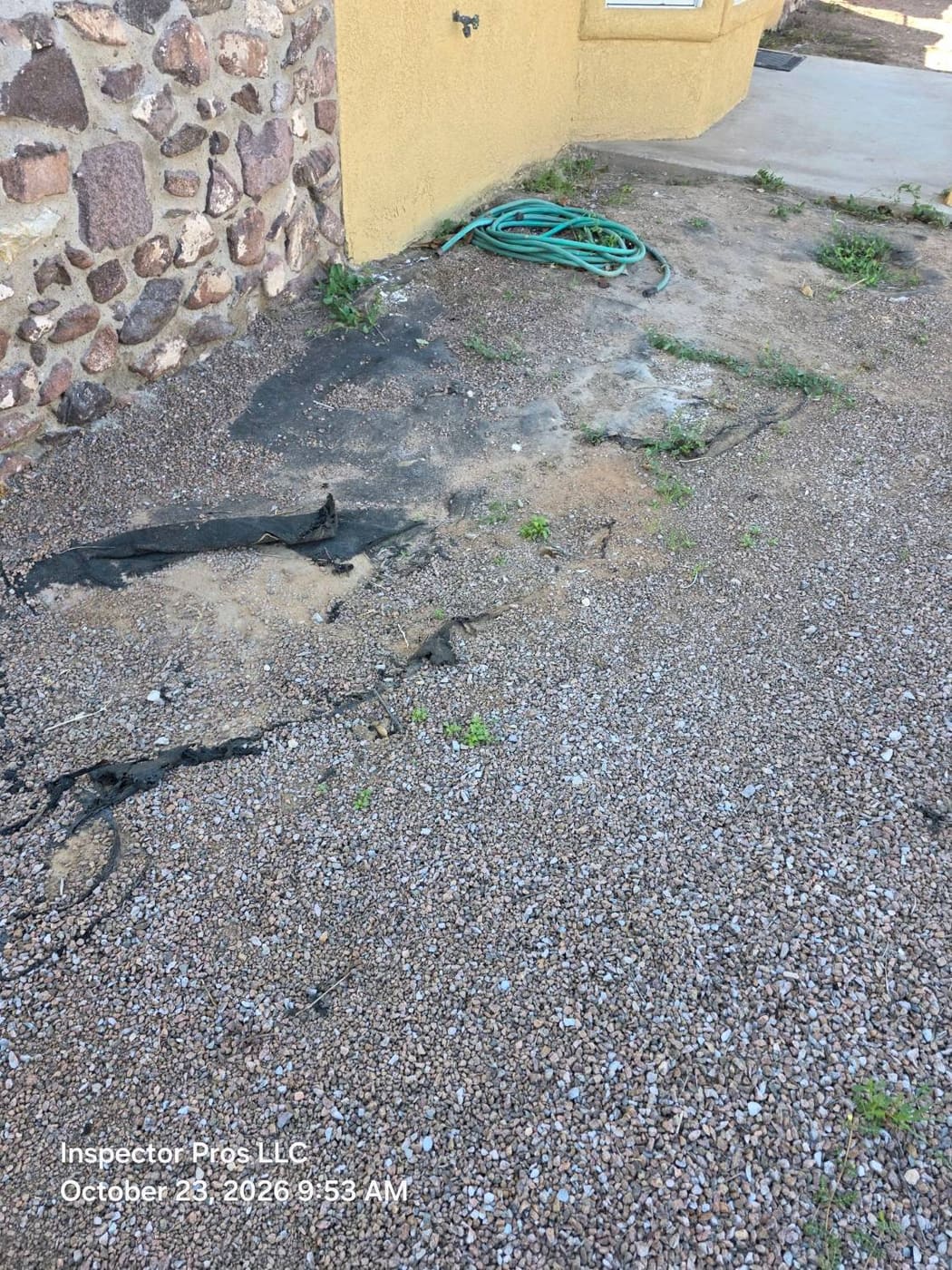
Water had cut channels through the side yard, tearing open the landscape fabric as it went. You can read the direction of flow in the soil.
Water cut channels through the side yard and tore the landscape fabric open. The paths it took are still visible in the soil. Inspector Pros, October 23, 2026.
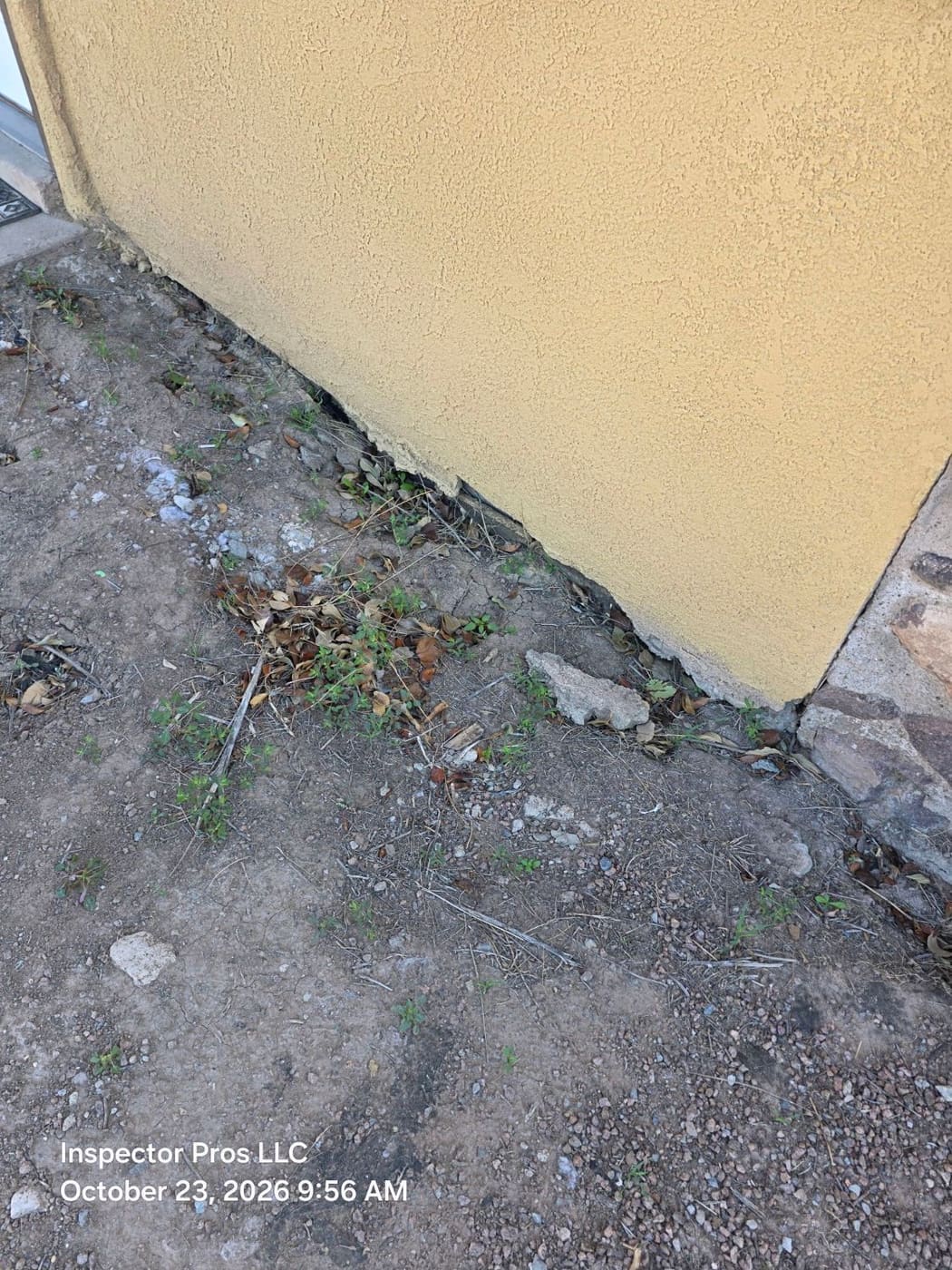
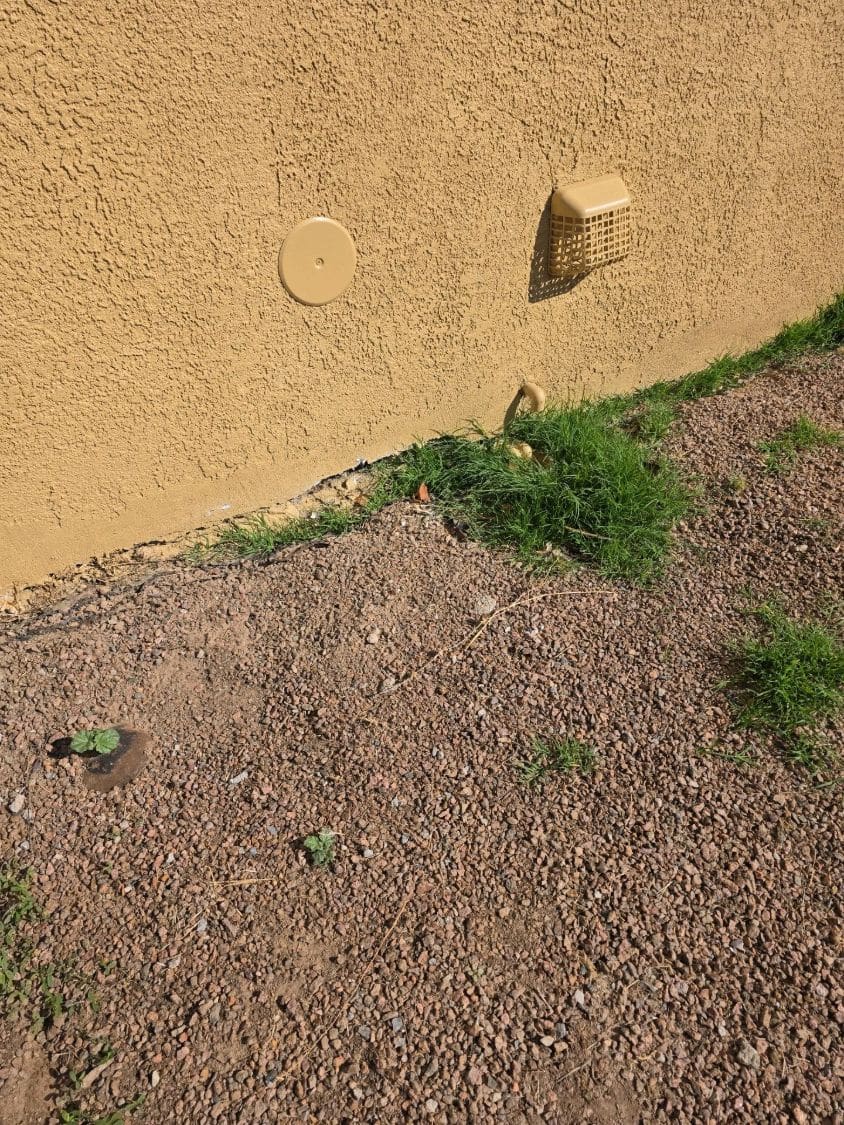
Soil had washed away from the base of the stucco in multiple places, leaving the edge of the slab exposed and a gap where the ground used to meet the wall.
Soil washed away from the base of the stucco, leaving a gap where the ground used to meet the wall. Inspector Pros, October 23, 2026.
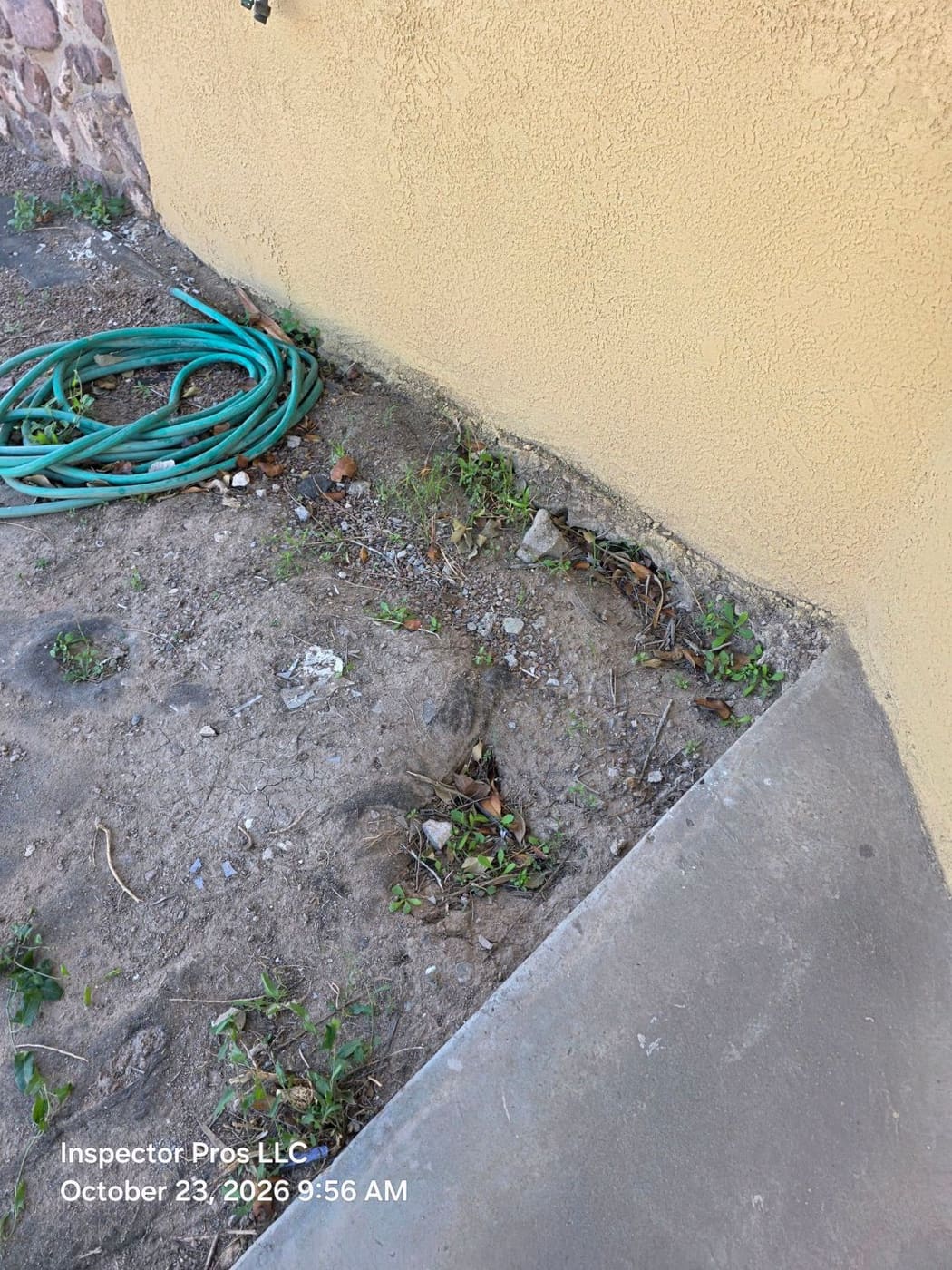
The same condition at the patio edge. The ground has dropped away from the structure rather than sloping away from it. Inspector Pros, October 23, 2026.
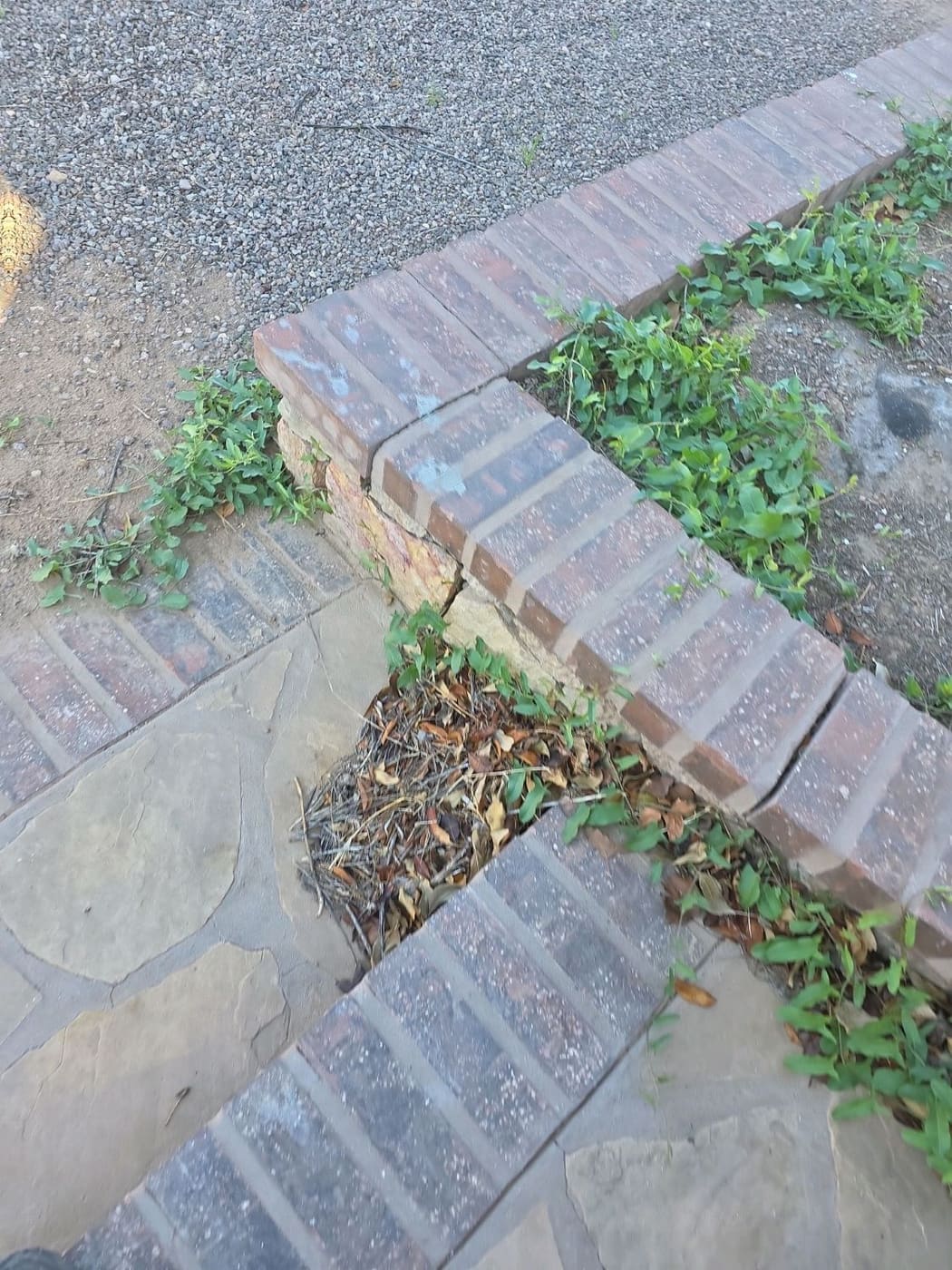
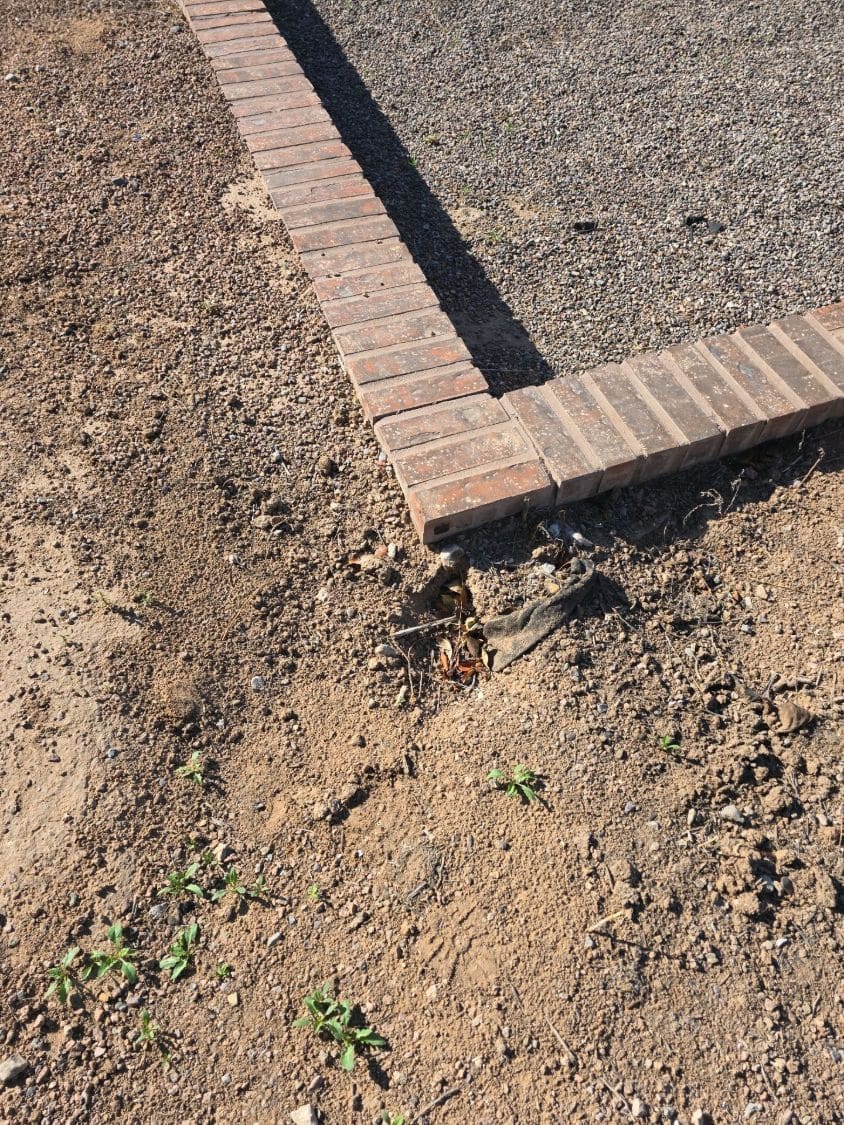
The brick edging had been undermined — water ran underneath it and carried the soil out from below, which also tells you how much water has moved through here and how often.
Water ran beneath the brick edging and carried the soil out from under it. Debris collected in the void shows the path. Inspector Pros, October 23, 2026.
Another section of edging with the soil gone from underneath. This does not happen in a single storm. Inspector Pros, October 23, 2026.
And in places the ground sloped toward the wall instead of away from it, including near wall penetrations, so runoff was being directed at the house rather than away from it.
Here the ground slopes toward the wall rather than away from it, directing runoff at the house. Inspector Pros, October 23, 2026.
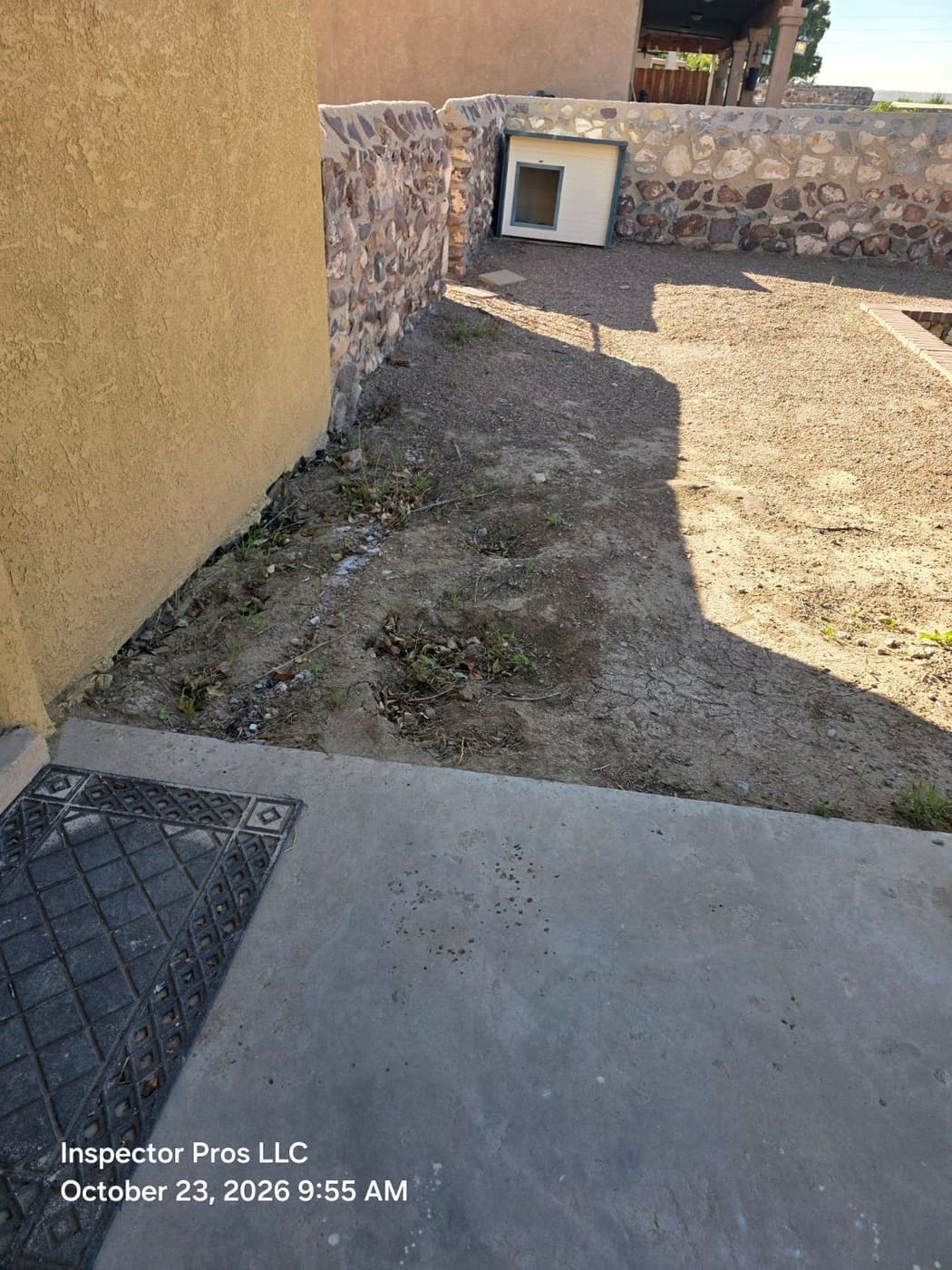
The side yard, with bare soil running up to the wall and no fall away from the structure. Inspector Pros, October 23, 2026.
Why This Matters More in the Upper Valley
Soil in the Upper Valley and the river-adjacent parts of El Paso County tends toward expansive clay. Clay swells when it takes on water and shrinks as it dries, and a slab sitting on soil that keeps cycling between those two states does not move evenly — one part lifts or settles relative to the rest. That is the mechanism behind most of the foundation movement we document in this region, and we have walked through what the finished product looks like in another case study.
El Paso delivers that water in bursts. Most of the year is dry; then a monsoon storm drops more rain in an afternoon than the previous two months combined. Soil that is already struggling to shed water gets soaked fast, then bakes out again.
Now add elevation. A house sitting above street level sheds its water to the street by default. A house level with the street has no such help — and when the street itself floods, water can move toward the lot instead of away from it. Every grading shortfall on a property like that matters more than the same shortfall somewhere with natural fall.
The Neighbor Across the Street
The buyer did something more buyers should do: they walked across the street and asked.
The neighbor said the area experiences a lot of flooding. That single conversation did more to explain the erosion patterns than another hour of inspecting would have. The yard was telling us water had been moving through aggressively and repeatedly. The neighbor explained where it was coming from.
Public records and seller disclosures do not always capture how a street behaves in a hard rain. The people who have lived through it do. If something in a report points to water, ask a neighbor.
No Damage Yet Is Not the Same as No Problem
We found no cracked brick, no stair-step cracking, no sticking doors, no sloping floors. On the day of the inspection, this was a 2007 home with no observed signs of structural movement.
That is genuinely good news, and it is also the reason to act. Everything we documented is a cause, and causes are cheaper to fix than effects. Correcting drainage on a home that has not moved is landscaping work. Correcting it after movement starts means the drainage work plus whatever the movement did — and by then an engineer is involved.
Nineteen years of water running at this foundation has not produced visible damage yet. That is not a guarantee about year twenty.
What We Recommended
This one did not call for a structural engineer. There was no movement to evaluate. What it called for was drainage correction by a qualified contractor, specifically: • Regrade so the ground falls away from the foundation on every side, roughly six inches over the first ten feet where the lot allows it. • Rebuild the front swales so they actually carry water off the lot toward the street or drainage easement. • Address the sunken area in back so it is not holding water near the structure. • Repair the eroded areas and restore soil that has washed away from the slab edge, keeping soil below the stucco line. • Re-set the undermined edging and backfill what the water carried out. • Make sure roof discharge, downspouts, and any canales release well away from the foundation rather than at its base.
With a lot this flat and a street that floods, a contractor may also need to look at where the water is supposed to go once it leaves the yard. Drainage work on a property with no natural fall is a design question, not just a shovel question.
If You Are Buying a Home on a Flat Lot
Walk the perimeter before you buy, ideally after a rain. Look for the things in these photos: channels cut through gravel or soil, landscape fabric torn open, edging undermined, soil pulled back from the base of the wall, low spots that hold water.
Then ask three questions: does the ground fall away from the house on every side, where is water supposed to go once it leaves the yard, and does the street itself flood? Grading and drainage findings are rarely dealbreakers, but they belong in your option period — with quotes — rather than in year three.
A buyer's inspection documents the conditions so you can negotiate from fact instead of impression.
Inspector Pros inspects homes throughout the Upper Valley, El Paso's West Side, East Side, Northeast, Horizon City, Las Cruces NM, and surrounding communities, 7 days a week. Call or text (915) 209-2332, or schedule online.
Frequently Asked Questions
How much should the ground slope away from a house?
The common guideline is a fall of about six inches over the first ten feet away from the foundation. That slope carries rain away from the slab before it can soak into the soil beside it. Lots that sit level with the street often fall short of it, which is why flat lots deserve closer attention.
What is a swale?
A swale is a shallow channel shaped into a yard to carry water deliberately — away from the house and toward the street or a drainage easement. A properly built swale goes unnoticed until it rains. A poorly shaped one can hold water or send it the wrong direction.
Why is erosion around a foundation a problem?
Erosion means water is moving against the structure often enough and fast enough to carry soil away. It exposes the slab edge, removes the support beside the foundation, and shows that water is soaking into the soil the foundation sits on. In expansive clay, repeated wetting and drying is what drives differential movement.
Does a flat lot mean I should not buy the house?
No. It means drainage deserves scrutiny. Plenty of El Paso homes sit on flat lots and perform fine because water has somewhere to go. The questions are whether the ground falls away from the structure, whether the yard moves water off the lot, and whether the street itself floods.
My inspection found drainage issues but no cracks. Is that serious?
It is the best version of the finding. Drainage problems are the cause; foundation movement is the effect. Correcting grading and drainage on a home that has not moved is landscaping work. Correcting it after movement begins means repairing the damage as well, usually with an engineer involved.
Should I ask neighbors about flooding before buying?
Yes. Seller disclosures and public records do not always capture how a street behaves in a heavy rain. On this inspection, a neighbor across the street confirmed the area floods, which explained the erosion patterns we had documented all the way around the home.
Do I need a structural engineer for drainage problems?
Not usually, when there are no signs of movement. Drainage and grading correction is work for a qualified contractor. An engineer becomes appropriate when a home shows evidence of foundation movement and someone needs to determine whether it is active and what should be done.