Buyer's Guide · El Paso, TX
Best Home Inspector in El Paso, TX
There is no single credential or review score that makes one inspector the right choice for every buyer. This guide explains what to verify before you hire anyone in El Paso, what the local housing stock and climate tend to produce, and how to hold any inspection company to the same standard — including this one.
Written by John Raley, Certified Master Inspector · TREC #25876
Last updated: August 26, 2026
What Actually Matters When Choosing a Home Inspector?
The items below are roughly in order of how much they tell you. Licensing is first because it is the only one you can confirm independently, in a public database, in about a minute.
Texas licensing
Inspectors performing home inspections in Texas must be licensed through the Texas Real Estate Commission. The public database lets you confirm the inspector's name, license number, current status, license history, and any disciplinary actions on record.
Check it yourself on the TREC License Holder Search , and review TREC disciplinary actions where relevant. A license is the floor, not the ceiling — but an inspector who will not give you a number should not stay on your list.
Verify your inspector before you hire them
Verify the individual who will perform your inspection, not just the company. A firm's credentials do not automatically apply to every person on staff, and the inspector assigned to your house may hold a different license and different certifications than the owner whose name is on the marketing. Do not take an inspector's claims at face value — including ours. Look up the individual license through TREC before you schedule.
The sample inspection report
The report is one of the main things you are actually buying. Everything else — the hours on site, the ladder work, the tools — exists to produce it. Ask to see a complete report from a real inspection before you book, not a blank template or a marketing excerpt.
Read it as though it described your house. Can you tell what the problem is, where it is, how serious it is, and what it implies for repair? Are there photographs of the actual defects? Is it organized so your agent can work from it during an option period? A report that is mostly checkboxes tells you far less than one that explains what was found and why it matters.
You can read our sample reports before booking, and you should ask every inspector you are considering for the same.
Review count and review history
A star rating on its own is close to meaningless. Almost every established inspector sits between 4.7 and 5.0. What tells you more is the number of reviews, whether they are still arriving, and whether they stay consistent over years rather than clustering in one burst.
Read what reviewers actually describe. Comments about report quality, thoroughness, and communication are more useful than a general compliment. One thing worth checking specifically: whether the reviews come from this market. A company operating in several cities, or a franchise sharing a national profile, may present a review count that is not specific to El Paso. That is not misconduct, but it is worth knowing what the number represents before you weigh it.
Professional organizations
Membership in a professional association such as InterNACHI is not a substitute for a state license, and it does not by itself prove one inspector is more thorough than another. What it does show is access — to continuing education, certification programs, standards of practice, and professional resources that go beyond the state minimum.
In this region there is a more specific signal worth asking about: the TPREIA-InterNACHI El Paso Chapter, where local inspectors meet monthly for training and professional development. An inspector who attends is spending time on continuing education alongside the people inspecting the same housing stock, in the same climate, under the same local conditions. Inspector Pros participates in the chapter.
The chapter publishes its meeting schedule on the InterNACHI El Paso Chapter page .
What a Texas license actually requires
It is worth knowing what the license itself represents, because Texas sets a higher bar than many states. A Professional Inspector license requires 194 hours of TREC-approved education — a 154-hour core plus a 40-hour field practicum — and passing two separate examinations: the Texas state exam and the National Home Inspector Examination, a nationally recognized test covering building systems and inspection standards.
The practical implication is that asking a Texas inspector whether they passed the NHIE tells you nothing, because every licensed inspector in the state has. What separates one licensed inspector from another is what came after: how many inspections they have actually performed, what additional certifications they pursued, and how well they document what they find.
Certifications beyond the minimum
A state license establishes that an inspector has met the minimum requirement to practice. Additional certification tells you where someone has chosen to go deeper. The Certified Master Inspector designation reflects substantial inspection volume and continuing education. ICC certification indicates code knowledge that matters on new construction and pre-drywall work. CCPIA certification applies to commercial property inspection, which follows a different standard than residential.
The useful question is not how long the list is. It is whether the training matches the property you are buying. Code certification is directly relevant on a new build and largely beside the point on a 1960s ranch home with an evaporative cooler.
Professional Engineer credentials
A Professional Engineer license is a serious engineering credential, and there are situations where it is exactly what a buyer needs — evaluating active structural movement, for instance, or analyzing a specific structural question that goes beyond the scope of a home inspection.
It is worth being precise about what it does and does not mean here. Texas does not require a PE license to perform a standard TREC home inspection, and the designation on its own does not determine how detailed a residential inspection will be. Residential inspection experience, familiarity with local building systems, inspection process, report quality, and the individual performing the work all bear on the outcome. Evaluate a PE the same way you would evaluate any other inspector, and use the credential where the property genuinely calls for engineering analysis.
Thermal imaging
Ask whether thermal imaging is included in the inspection fee or billed as an upgrade. Both are legitimate; you simply need to know which you are getting.
Be wary of anyone who describes infrared as seeing through walls. It does not. A thermal camera detects surface temperature differences, which can point toward moisture, missing insulation, or a heating electrical connection. Those readings are leads that need confirmation with another tool, typically a moisture meter. Used properly it is a genuinely useful supplemental tool. Described as an X-ray, it is marketing. Inspector Pros includes thermal imaging on every inspection at no additional charge.
How the roof gets inspected
There are several legitimate methods: walking the roof surface, observing from a ladder at the edge, flying a drone, or viewing from ground level with binoculars. Each has real limitations, and conditions decide which is appropriate — pitch, surface material, height, and weather all matter, and no inspection is worth an injury.
Drone inspection in particular is a capable method, not a shortcut; it often produces better coverage of a steep or fragile roof than walking would. What matters is that you understand which method was used on your house and what it could not cover. Ask in advance, and check that the report states the method used.
Insurance, guarantees, and warranties
Ask whether the inspector carries errors and omissions insurance and general liability coverage. Ask what guarantee or warranty programs come with the inspection, and then ask the more useful follow-up: what are the terms and limitations?
Guarantee programs are worth having, but they are a backstop, not a substitute for a careful inspection. Read what is actually covered, what the claim window is, and what is excluded before you treat any program as meaningful protection.
What is included, and what costs extra
Inspection pricing is difficult to compare because companies bundle differently. Termite and WDI, sewer scope, pool and spa, irrigation, foundation elevation measurements, thermal imaging, floor plans, and new construction phase inspections may each be included or billed separately.
Compare the total cost of the services your property actually needs rather than the headline inspection fee. A lower base price with four paid add-ons can easily exceed a higher price that includes them.
Ask us directly what is included and what is billed separately — we will give you the whole figure for the services your property actually needs, not a headline price.
Who will actually inspect the house?
Buyers tend to evaluate the company. The inspection is performed by a person. At firms with several inspectors on staff, the reputation you researched and the individual who arrives at your house may not be the same thing, and that difference is entirely legitimate to ask about.
Worth asking: who is assigned to my inspection, what is their license number, how long have they been inspecting, how many inspections have they personally performed, what certifications do they hold, do they walk roofs when it is safe to do so, do they use thermal imaging, and will they personally answer questions about the report afterward?
Our inspectors, their licenses, and their certifications are listed on our team page.
Independent Directories and Vetting Programs
Some independent directories publish the criteria an inspector must meet to be listed. These are not licensing bodies, government agencies, or regulators, and inclusion in one is not a substitute for checking a license. Where a directory publishes its requirements openly, though, it gives you one more external reference point.
Inspector Pros is listed by Best Inspector List , an independent inspector directory whose published requirements include state licensing or certification, InterNACHI membership, use of thermal imaging, roof-level inspection, errors and omissions coverage, allowing clients to attend the inspection, and a 4.9 or higher Google rating. Buyers should still perform their own licensing and credential verification.
Home Inspection Issues Commonly Found in El Paso
Desert climate, caliche and clay soils, stucco construction, low-slope roofing, and hard water give this region a distinct problem profile. An inspector who works El Paso every week knows which of these are routine and which warrant a closer look. None of the following means a home is in poor condition — they are the conditions a competent local inspection accounts for.
Flat and low-slope roofing
Low-slope roofs are common here because rainfall is low and they cost less to build. They fail differently from pitched roofs. The recurring findings are ponding water where drainage is inadequate, blistered or deteriorated coating, failed seams and lap joints, and flashing problems at parapet walls and penetrations. On many El Paso homes the scuppers are the only drainage path, and when they sit too high or clog, water has nowhere to go. See our guide to common problems found in El Paso homes.
Stucco
Stucco is a rigid finish over a structure that moves, and the thermal swing in this climate guarantees some cracking. The question is which cracks matter. Hairline cracking at control joints is usually cosmetic. Diagonal cracking radiating from window and door corners, particularly when it is mirrored on the interior, can indicate movement below. Penetrations such as hose bibs, electrical boxes, and refrigerant line sets are where water finds a way behind the finish. Concealed moisture cannot be confirmed by looking at a wall, which is why probing and moisture readings matter more than a visual pass.
Cooling systems
Air conditioning in El Paso is closer to critical infrastructure than a seasonal convenience, and equipment here accumulates far more run hours than the same unit would in a milder climate. Evaporative coolers are still common on older homes and need annual pad, pump, and float service. Attic ductwork sits in extreme summer heat, so deteriorated or poorly supported duct insulation turns up regularly, along with condensate drainage problems and disconnect wiring issues.
Hard water
Water in this region carries a heavy mineral load, and the effects accumulate quietly. Sediment builds in water heater tanks, scale collects at fixtures and shut-off valves, and supply lines can narrow over time in older galvanized plumbing. A water heater that has never been flushed often reaches the end of its service life earlier than its rated lifespan would suggest.
Soil and foundation movement
Caliche layers and expansive clay soils both occur across the region, and both affect how water behaves around a slab. Signs worth evaluating together include sticking doors and windows, diagonal drywall cracking at openings, gaps where trim meets ceilings or floors, and measurable floor slope. No single crack proves foundation failure. The pattern across the whole house is what matters, and where movement appears active the right next step is a licensed structural engineer rather than a repair estimate from a company that sells repairs. See our guide to foundation inspection with an engineer evaluation.
Older housing stock
Established neighborhoods such as Ysleta and the Lower Valley include homes built well before current standards. That is not a defect in itself, and many of these homes are in excellent condition. It does mean an inspector should expect to encounter older electrical equipment, earlier plumbing materials, additions and roof modifications of varying quality, and mechanical systems near the end of service life. Each gets evaluated on what is actually present, not on assumptions about the neighborhood.
Real El Paso Inspection Findings
These are photographs from Inspector Pros inspections in the El Paso area, not stock images. They are included to show what these conditions actually look like in the field.
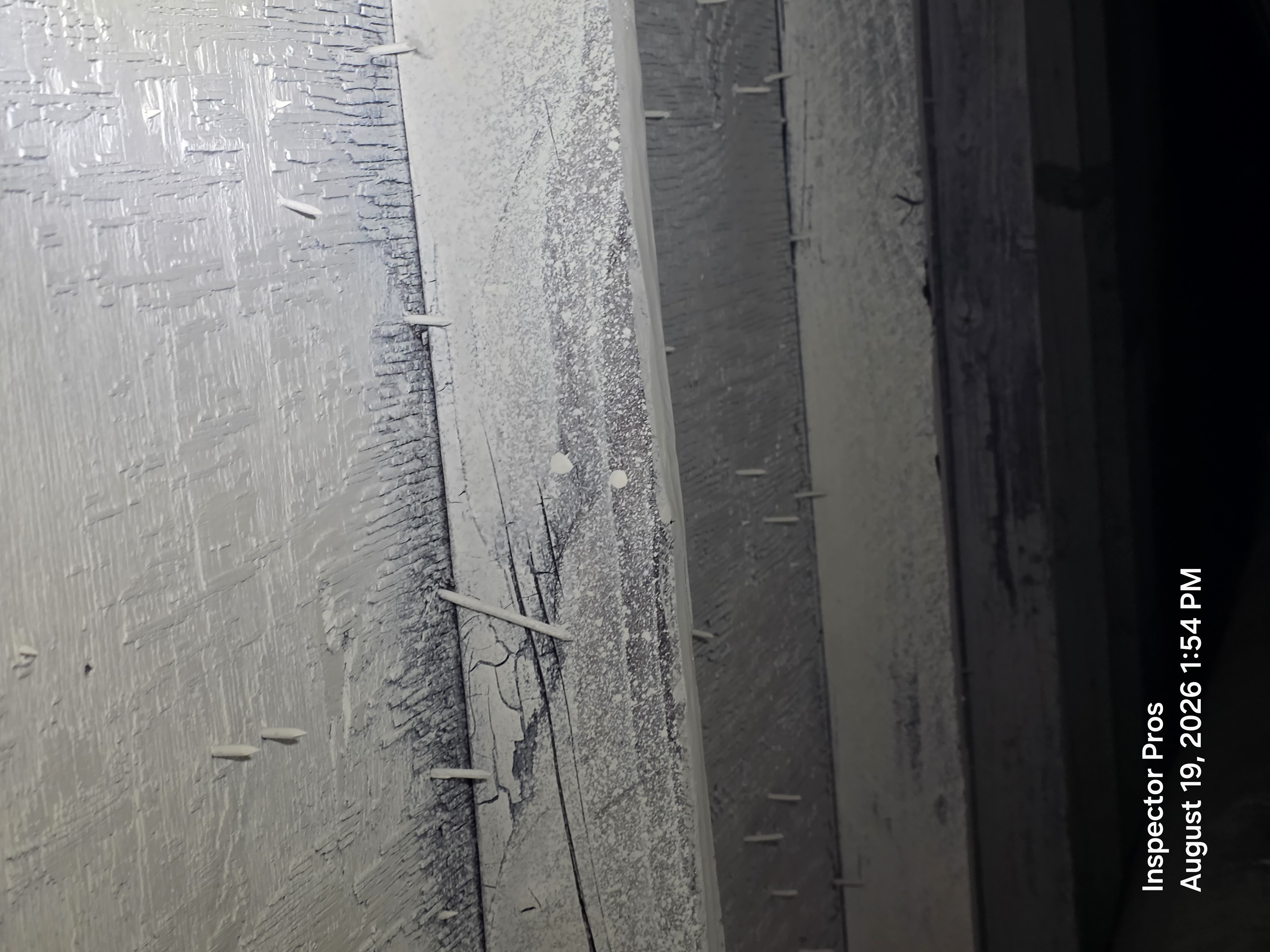
Evidence of a hidden attic fire
During an inspection on the West Side, our inspector found charred framing in the attic — evidence of a previous fire in an area that was not visible from the finished living space below. Nothing in the rooms underneath indicated it. This is the kind of finding that only surfaces when someone physically enters the attic and looks.
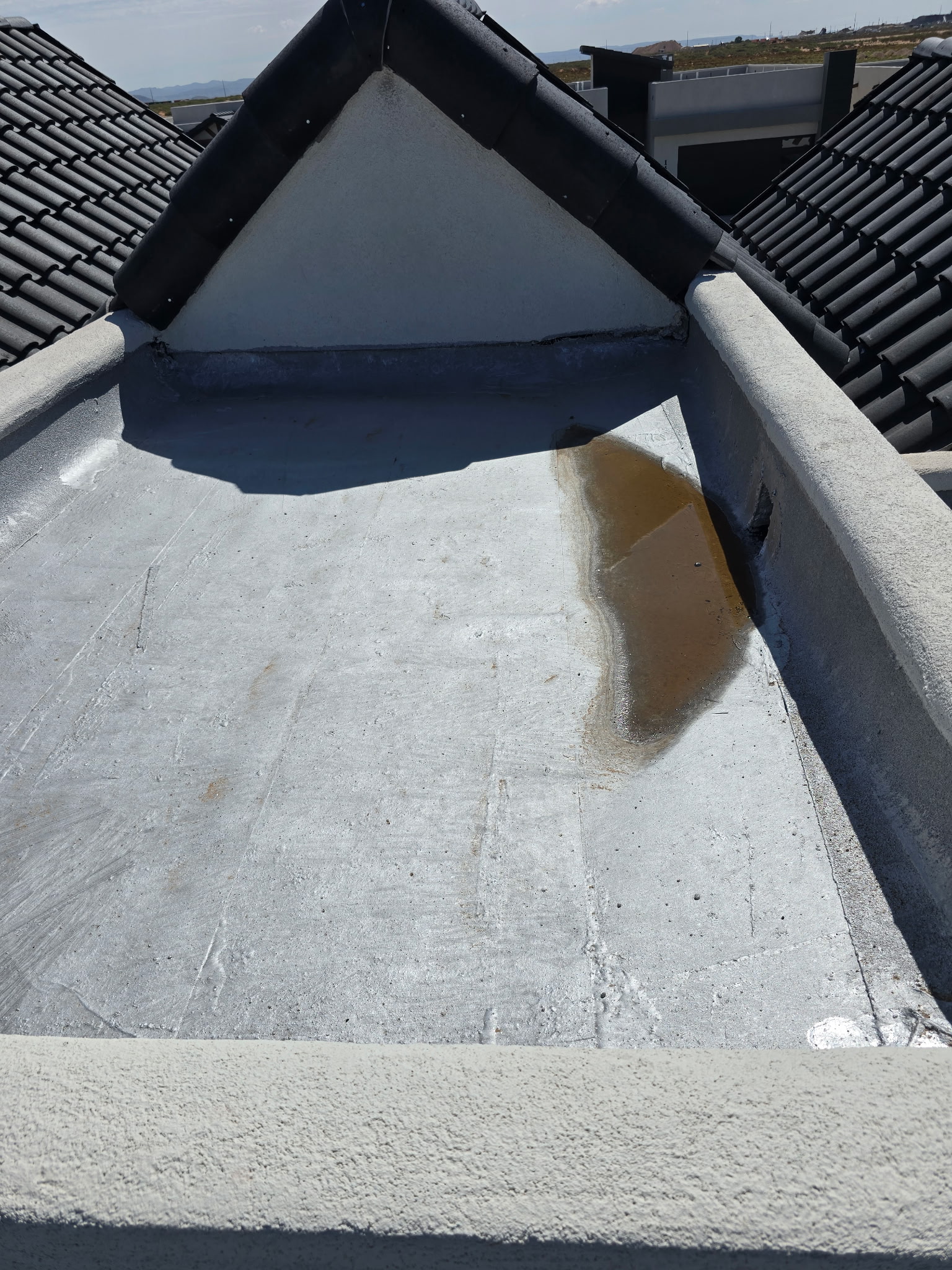
Ponding on a low-slope roof
Standing water against a parapet, with tan staining ringing the area where previous ponding evaporated. Water that remains on a membrane more than 48 hours after rain is a recognized sign of drainage failure, and the staining shows this is a repeat occurrence rather than a one-off.
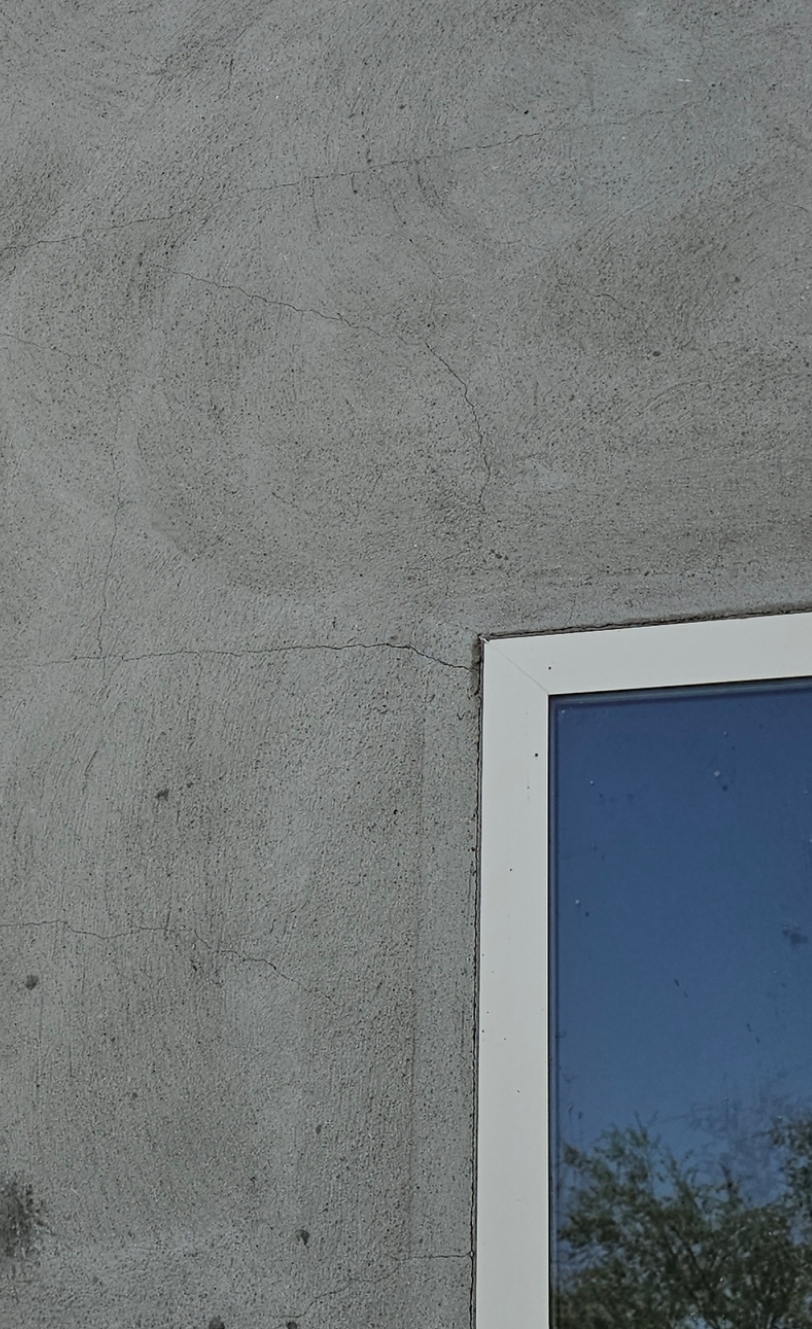
Diagonal cracking at a window corner
Diagonal cracking radiating from the corner of an opening is one of the patterns worth evaluating further, especially when similar cracking appears on the interior in the same location. On its own it is not proof of a foundation problem — it is a reason to look at the rest of the structure carefully.
Questions to Ask Before You Book a Home Inspector
Ask these of any inspector you are considering, this company included. For each one, there is what a good answer sounds like — and what you should confirm for yourself rather than take on trust.
1. Can I verify your Texas license through TREC?
A good answer: The inspector gives you a license number without hesitation and expects you to check it.
Verify it: Search the number yourself in the TREC License Holder Search. Confirm the status is active and the name matches the person who will be at your inspection.
2. Does your license history show any disciplinary actions?
A good answer: A direct answer either way. Disciplinary history is public, and a straightforward explanation of an old matter is more reassuring than a deflection.
Verify it: TREC publishes disciplinary actions. Check the record rather than relying on the answer alone.
3. Who will actually perform my inspection?
A good answer: A specific name, not 'one of our inspectors'. Larger firms rotate staff, so a company's overall reputation may not reflect the person assigned to your house.
Verify it: Ask for that individual inspector's license number and look it up separately from the company.
4. Can I see a real sample inspection report?
A good answer: A complete report from an actual inspection, not a blank template or a marketing excerpt.
Verify it: Read it as though it were your house. Can you tell what the problem is, where it is, and why it matters?
5. How many reviews do you have, and are they from this market?
A good answer: A clear answer about whether the count reflects local clients or is pooled across multiple markets or franchise locations.
Verify it: Open the reviews and read recent ones. Look for local neighborhoods and specific mention of report quality.
6. How many inspections have you personally performed?
A good answer: A real number for the individual inspector, not the company total. Volume builds pattern recognition — an inspector who has seen two thousand El Paso roofs reads one faster than someone who has seen fifty.
Verify it: The Certified Master Inspector designation requires a minimum of 1,000 fee-paid inspections, or an equivalent combination of inspections and continuing education, so it is one of the few places inspection volume is tied to a verifiable credential.
7. Do you belong to a professional organization such as InterNACHI?
A good answer: Membership plus specifics — which certifications, and whether they attend local chapter training.
Verify it: Membership is not a license and does not guarantee quality. Treat it as evidence of access to training.
8. Is thermal imaging included, or an additional charge?
A good answer: A straight answer on cost, and a realistic description of what infrared can and cannot show.
Verify it: Be skeptical of anyone claiming infrared sees through walls. It detects temperature difference, which is a clue rather than an image of what is behind the surface.
9. Do you physically walk the roof when it is safe and accessible?
A good answer: A clear description of the method used and the conditions under which it changes.
Verify it: Ask what happens when a roof cannot be walked, and check that the report states which method was used on your house.
10. What is included in the price, and what costs extra?
A good answer: An itemized answer covering termite and WDI, sewer scope, pool, irrigation, and thermal imaging.
Verify it: Compare the total for the services you actually need, not the headline inspection fee.
11. Are you licensed to inspect in New Mexico?
A good answer: For buyers in Sunland Park, Santa Teresa, or Las Cruces, a New Mexico license number. Texas licensing does not cover New Mexico.
Verify it: New Mexico licensing is separate from TREC. Ask for the NM number specifically if you are buying across the state line.
12. Do you sell or share my contact information?
A good answer: A plain no. Inspection leads are sometimes passed to solar, water-treatment, and insurance marketers.
Verify it: Ask before you book. Inspector Pros does not sell client contact information.
13. How quickly will I get the report, and can I ask questions afterward?
A good answer: A specific turnaround commitment and direct access to the inspector after delivery.
Verify it: Option periods are short. Confirm the report will arrive with enough time left for you to act on it.
Inspector Pros Credentials and Inspection Standards
Applying the same standard to ourselves, here is what we hold and what you can verify. Every license number below can be checked in the relevant state database.
We carry 300+ five-star Google reviews, include the InterNACHI Buy-Back Guarantee and a 90-day inspection warranty with every buyer's inspection, and deliver reports the same day — guaranteed by 9 AM the following morning. Both guarantee programs have terms and limitations, and they are a backstop rather than a substitute for the inspection itself.
Inspector Pros does not sell or share client contact information.
Full detail is on our qualifications page, team page, and sample reports.
Frequently Asked Questions
How do I verify a home inspector's license in Texas?
Use the TREC License Holder Search at trec.texas.gov. Search by name or license number and select the Inspector license type. The database shows license status, type, expiration date, and disciplinary history. Every licensed inspector in Texas appears in it.
Does Texas require home inspectors to be licensed?
Yes. Inspectors performing home inspections in Texas must be licensed through the Texas Real Estate Commission. New Mexico licensing is separate, so an inspector working in Sunland Park, Santa Teresa, or Las Cruces needs New Mexico licensing as well.
Is a Professional Engineer automatically a better choice for a home inspection?
Not automatically. A PE license is a significant engineering credential and is valuable when engineering analysis is genuinely needed, such as evaluating active structural movement. Texas does not require a PE to perform a standard TREC home inspection, and the designation alone does not determine how detailed a residential inspection will be. Residential inspection experience, building-system knowledge, process, report quality, and the individual performing the work all matter.
What does a Texas home inspector license actually require?
A Texas Professional Inspector license requires 194 hours of TREC-approved education — a 154-hour core plus a 40-hour field practicum — and passing two examinations: the Texas state exam and the National Home Inspector Examination. Because the NHIE is required for licensure in Texas, every licensed inspector in the state has passed it, so it does not distinguish one licensed inspector from another. Inspection volume, additional certifications, and report quality are what vary.
Does thermal imaging see through walls?
No. Infrared cameras detect surface temperature differences, which can suggest moisture, missing insulation, or a heating electrical connection. Those readings are clues that need confirmation with other tools such as a moisture meter. Thermal imaging is a supplemental tool, not an X-ray.
What additional inspections should El Paso buyers consider?
A sewer scope on any home built before 1980, since clay tile and cast iron laterals are common and age-prone. A termite or WDI inspection, as both subterranean and drywood termites occur in the region. A pool inspection where there is a pool. New construction buyers should consider a pre-drywall inspection while the framing is still visible.
Ready to Schedule Your Inspection?
Verify us the same way you would verify anyone else on your list. When you are ready, we are here.