We Found a Hidden Attic Fire on a West Side El Paso Home Inspection
White-painted attic decking looked fine. Scratch it and there's char underneath. Here's how a firefighter-inspector recognized concealed fire damage — and what it meant for the buyer.
Written by John Raley, CMI — Certified Master Inspector · Texas Professional Real Estate Inspector · Former Socorro Volunteer Fire Fighter
The attic on a West Side El Paso resell looked fine at first glance. Painted decking, no obvious sagging, no visible daylight. The kind of attic a lot of inspectors move through quickly. But something was wrong with the paint.
The First Red Flag: A Second Attic Access Panel
Before I even got into the attic, I found something unusual in the master bedroom closet — a second attic access panel. Most homes have one primary attic access, commonly located in a garage, hallway, or closet. A second access panel caught my attention because it suggested that this portion of the attic may have required separate or repeated access after the home was built. I made a note of it and kept going.
What I Saw When I Got Up There
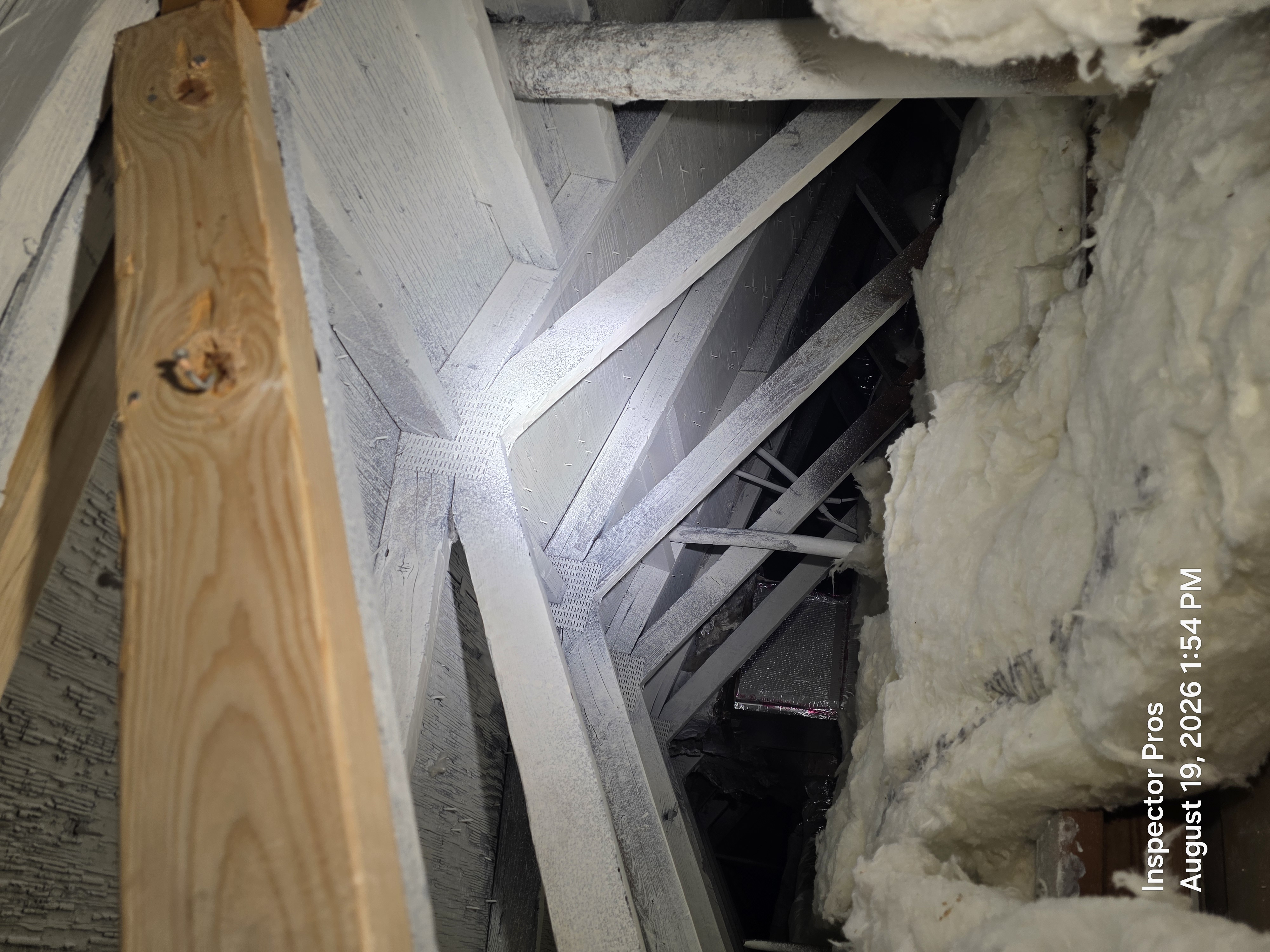
The decking and trusses were painted white — a bright, clean silver-white that read as a renovation. Painted roof decking or structural framing in an attic is unusual and deserves closer examination. Paint can obscure staining, discoloration, microbial growth, fire-related damage, previous repairs, or other conditions that would otherwise be visible. It is a reason to look harder, not move on.
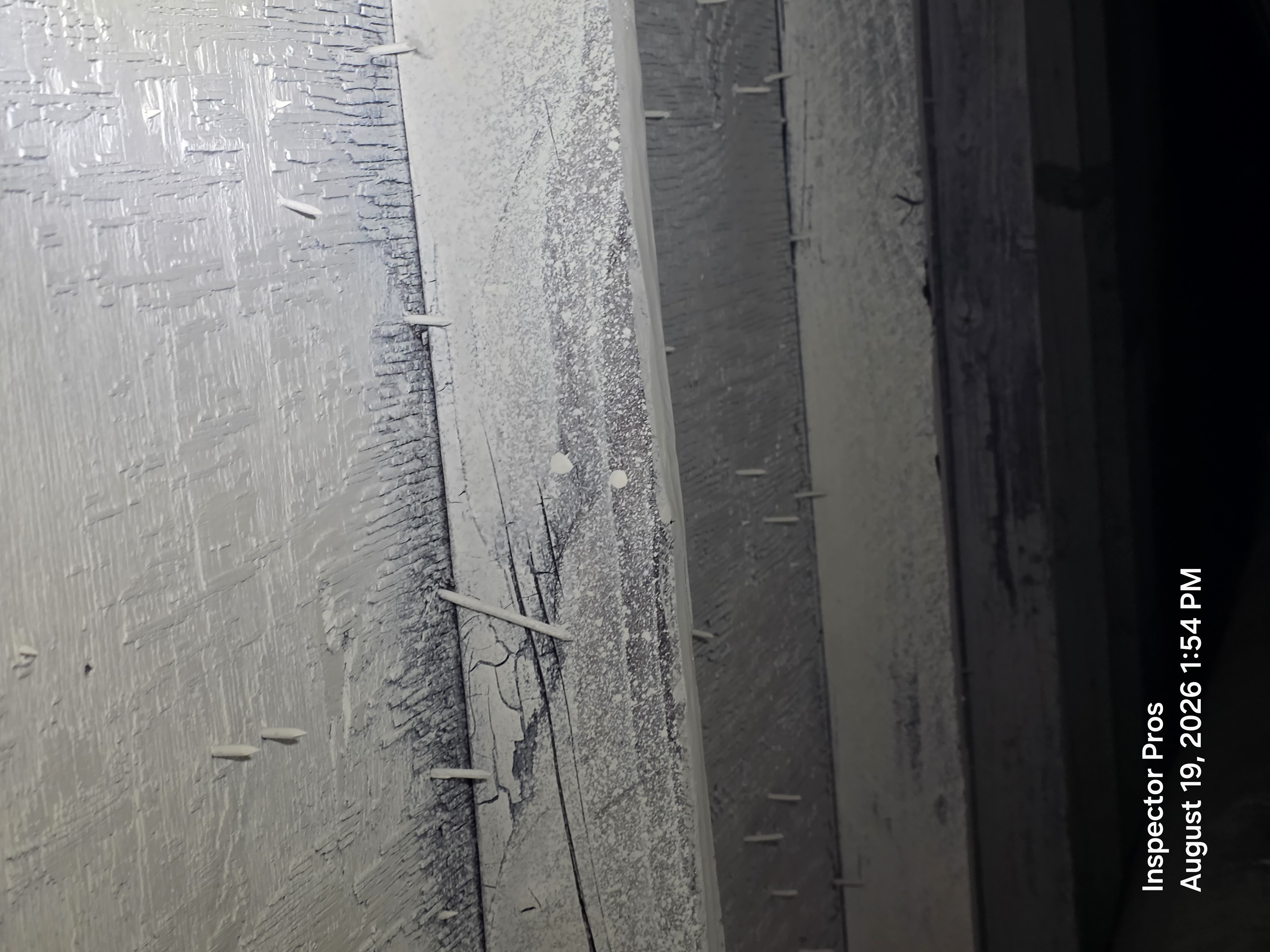
I ran my hand along the decking and scratched through the paint with my thumbnail. Underneath it: black char.
Look closely at the horizontal band running through the decking — that dark line is char. The white paint was applied on top of it. Inspector Pros, August 19, 2026. Notice how the paint is cracking along the burn line. The char runs in a clear band across the decking — exactly where the fire traveled before it was suppressed. Paint is sometimes applied during fire restoration to seal in odor, so its presence alone does not indicate improper work. What matters is whether the structural damage beneath it was properly evaluated and repaired.
Fresh unfinished lumber sistered into the truss system next to the painted fire-damaged structure. The repair is visible — the disclosure was not. Inspector Pros, August 19, 2026.
The Chainsaw Cuts Told the Rest of the Story
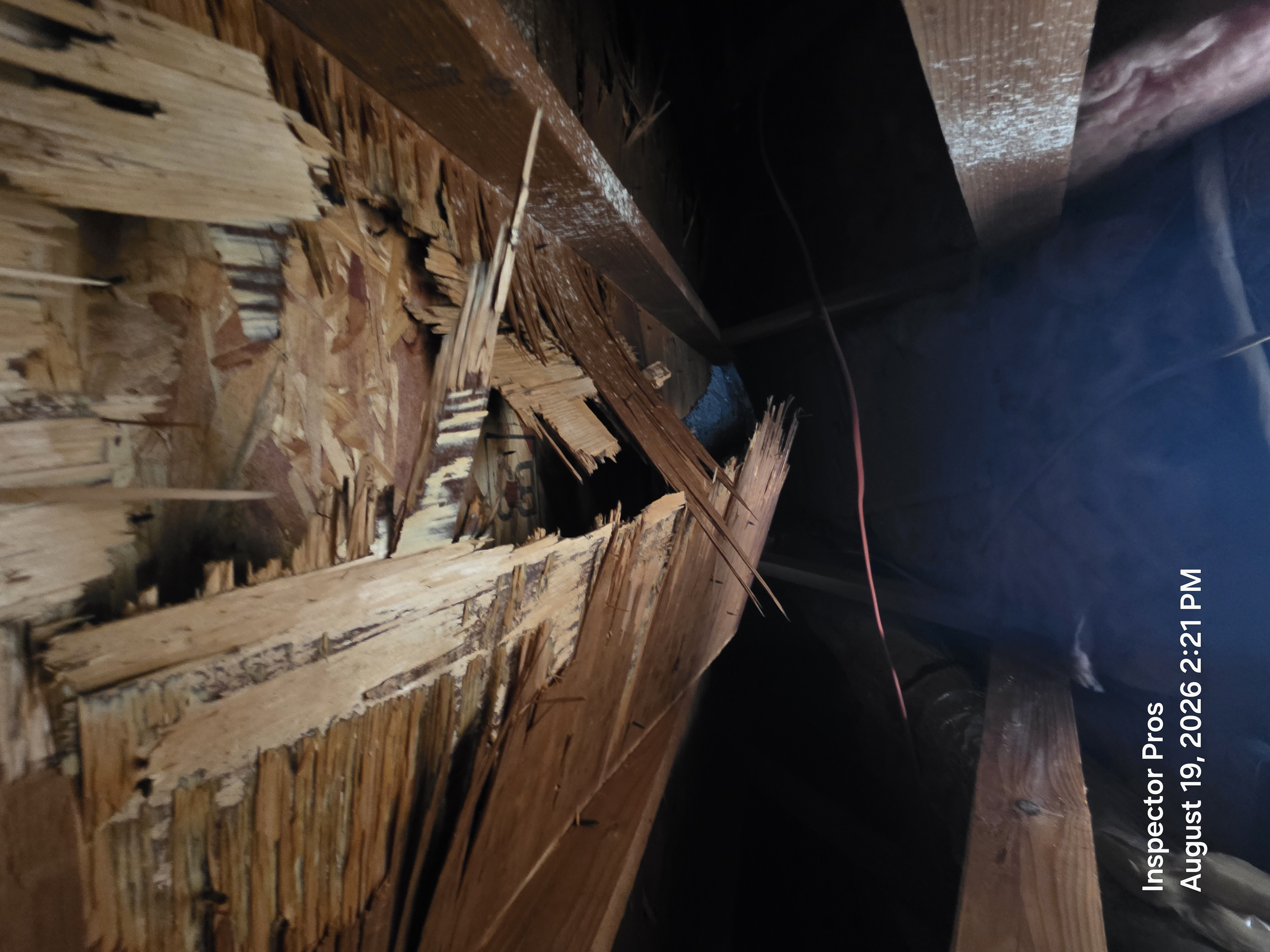
As I moved through the attic, I found where firefighters had cut through the roof decking with a chainsaw to vent the attic. Ventilation cuts are a standard fire suppression tactic — you open the roof to let heat and smoke escape so the fire does not spread horizontally through the attic space.
This is what a vent operation looks like from inside the attic. Firefighters cut through the decking to release heat and stop the fire from spreading. Inspector Pros, August 19, 2026. I knew what I was looking at because I have been on the roof side of that chainsaw. As a former Socorro Volunteer Fire Fighter, I have made those cuts. The pattern, the angle, the way the decking splintered outward — this was a vent operation. The evidence was consistent with a previous attic fire involving roof ventilation operations. The buyer had no idea.
What This Means for a Buyer
An attic fire is not automatically a dealbreaker. What matters is what was done after it. Were the compromised trusses properly sistered or replaced? Was the structural integrity of the roof system verified by an engineer? Was the work permitted and inspected? Is there any record of this fire in the home's disclosure history?
The paint obscured visible evidence of the previous fire damage, and the buyer reported that the prior fire had not been disclosed. This raised additional questions regarding the history of the damage, repairs performed, permits, engineering documentation, and seller disclosures — all of which the buyer would need to investigate further with their agent and legal counsel.
The buyer now had what they needed to ask the right questions, demand documentation, and make an informed decision about whether to proceed and on what terms. That is exactly what an inspection is supposed to do.
Why Firefighter Training Changes What You See in an Attic
Firefighting experience provided additional context when evaluating the cut patterns, repaired decking, and other evidence observed in this attic. Recognizing what a vent operation looks like from the inside — and connecting that to the second access panel, the paint, and the sistered lumber — is the kind of pattern recognition that comes from having been on both sides of it.
John Raley is a former Socorro Volunteer Fire Fighter. Bobby Raley served with the Horizon City Fire Department and worked in fire safety on a U.S. military installation. That combined background shows up on every inspection — not as a marketing line, but as a different frame of reference in spaces that reward it.
Inspector Pros serves the West Side of El Paso, the East Side, Horizon City, Las Cruces, and all surrounding communities. We include thermal imaging on every inspection at no extra charge. If you are buying a resell home — especially one with any signs of prior work or unpermitted additions — call (915) 209-2332 or schedule online here.
Frequently Asked Questions
Why would attic decking be painted?
Painted roof decking or structural framing in an attic is unusual and warrants closer examination. Paint can obscure staining, microbial growth, fire-related damage, previous repairs, or other conditions that would otherwise be visible. It is not automatically evidence of concealment, but it is a reason to look harder — as this inspection demonstrated.
Can a home inspector find evidence of a past fire?
Yes — if you know what to look for. Char under paint, unusual repair patterns in attic decking, and evidence consistent with roof ventilation operations are all observable during a thorough attic inspection. Firefighting experience provided additional context for interpreting those findings in this case.
Does a seller have to disclose a past fire in Texas?
Texas sellers may have disclosure obligations regarding known previous conditions or damage. When evidence of a prior fire is discovered that was not disclosed to the buyer, the buyer should review the seller's disclosure and available repair, permit, and insurance documentation, and discuss any legal questions with their real estate professional or attorney. A home inspection does not determine whether a seller has complied with legal disclosure requirements.
What happens to roof trusses after an attic fire?
Heat from a fire can compromise the structural integrity of engineered trusses even without complete combustion. When previous fire damage and structural repairs are discovered, buyers should look for available documentation such as engineering evaluations, repair details, permits, and inspection records. If adequate documentation is unavailable, further evaluation by a qualified professional may be appropriate before proceeding.
What is an attic vent cut?
During some structure fires, firefighters may cut openings in the roof as part of vertical ventilation operations to release heat, smoke, and fire gases and improve conditions for coordinated firefighting operations. The cut patterns left in roof decking are distinctive. In this inspection, the pattern observed was consistent with ventilation operations, which — combined with the char, the paint, and the structural repairs — informed the overall assessment.
Why does Inspector Pros include thermal imaging on every inspection?
Thermal imaging detects surface temperature differences that can help identify patterns associated with moisture, missing or inconsistent insulation, air leakage, and some electrical or mechanical concerns. It does not see through walls or independently confirm moisture or concealed damage — findings are evaluated alongside visual observations and other tools such as moisture meters. We include it on every inspection at no extra charge because it adds meaningful information to what we observe.