The Rock Wall Told the Story: Foundation Settlement on a Northeast El Paso Home
Cracks through the brick on three sides, a cracked rock wall in line with the house, and poor drainage all around. Here is how a Certified Master Inspector read foundation settlement on a 1979 El Paso home.
Written by John Raley, CMI — Certified Master Inspector · Texas Professional Real Estate Inspector · ICC Residential Building Inspector
Brick cracks on a 1979 home do not automatically mean the foundation is moving. Brick veneer cracks for all kinds of reasons, and plenty of El Paso homes carry old cracking that stopped decades ago.
What made this Northeast El Paso inspection different was the rock wall. The boundary wall in the yard — a separate structure that shares nothing with the house but the dirt underneath it — had cracked straight through, in line with the cracking on that side of the home. When two independent structures crack along the same line, the common factor is the ground.
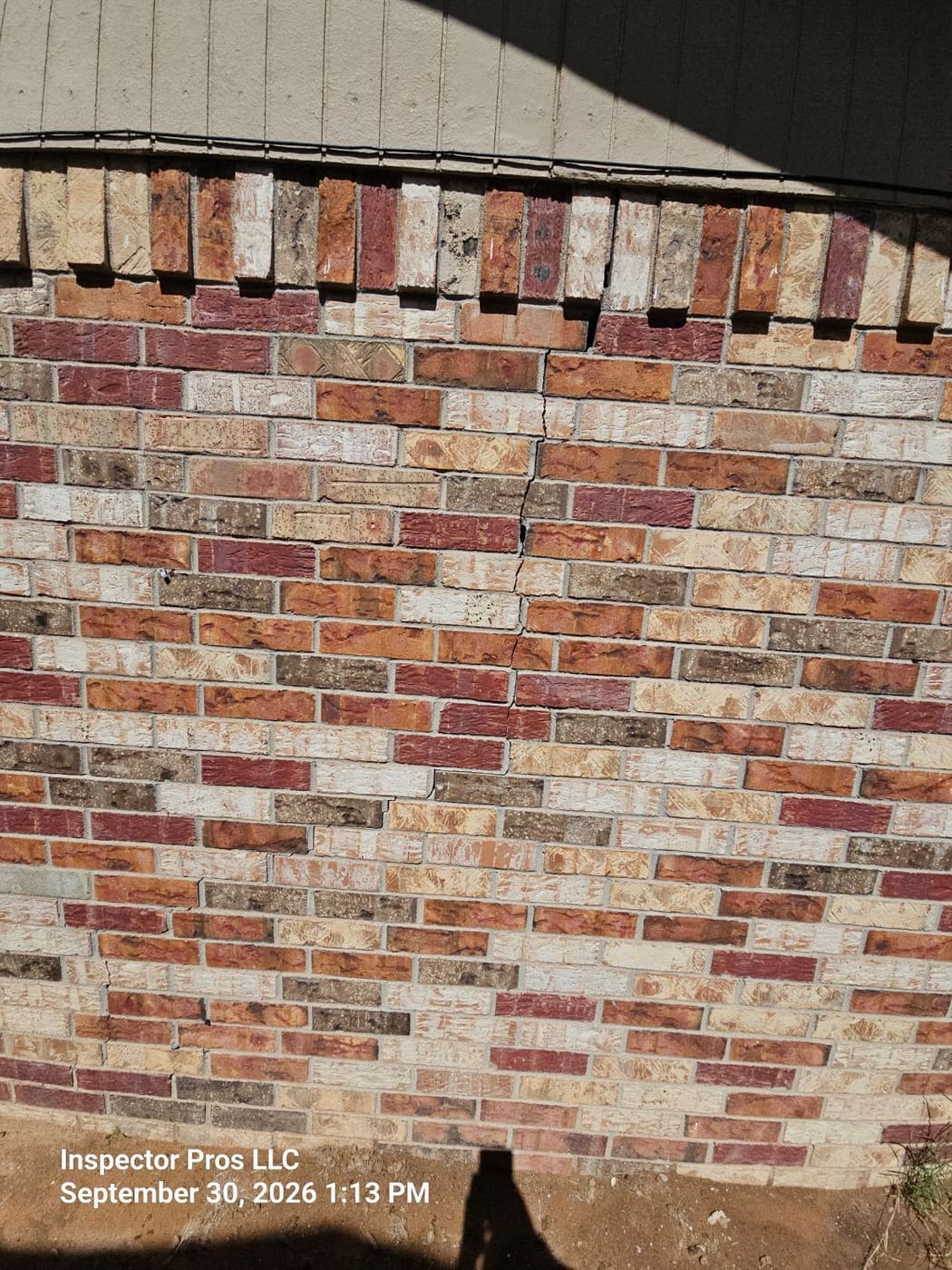
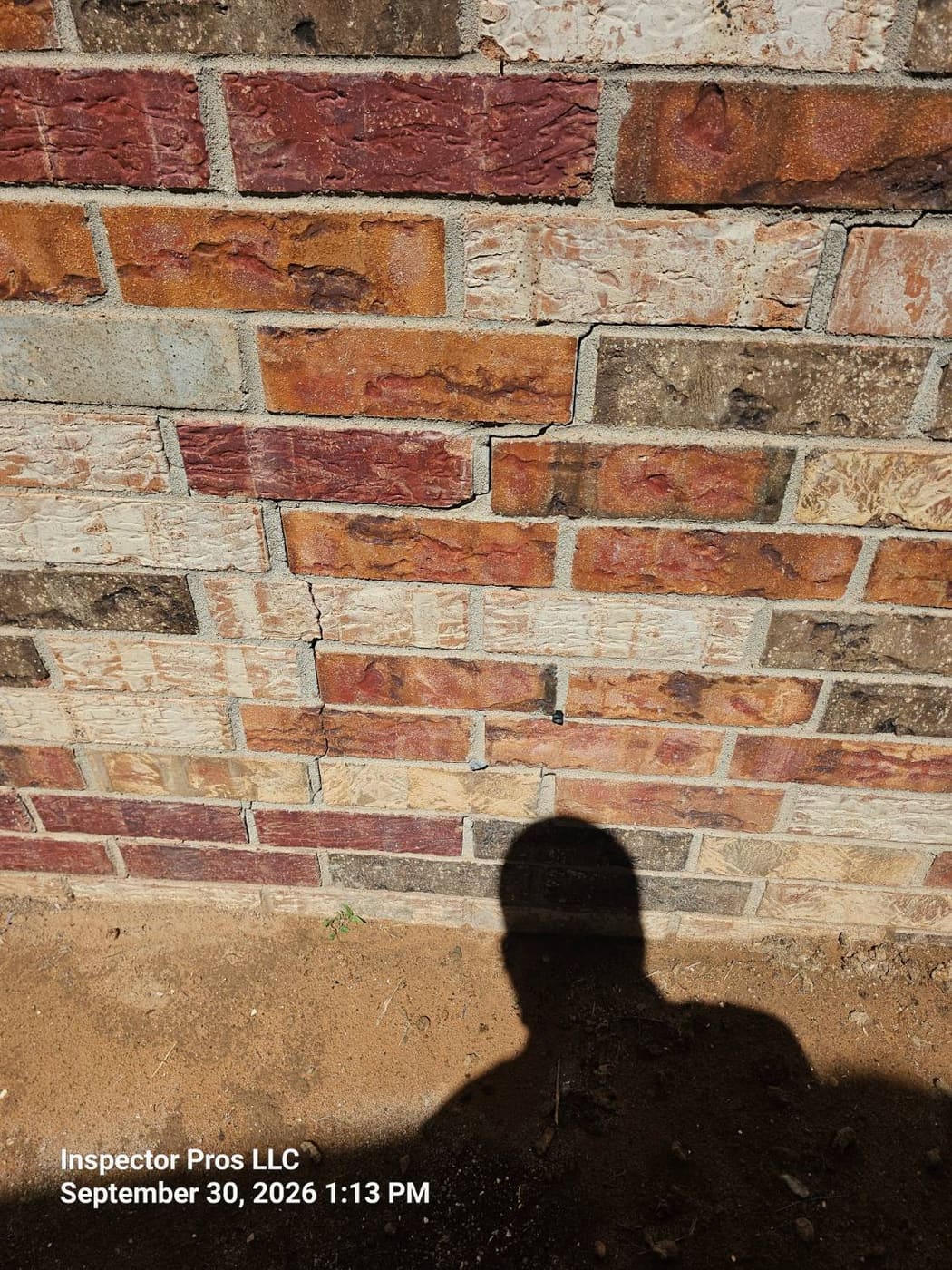
The widest crack on the property, running from the soldier course at the top of the wall down through the veneer. Measured over an inch at its widest point. Inspector Pros, September 30, 2026.
What We Found Outside
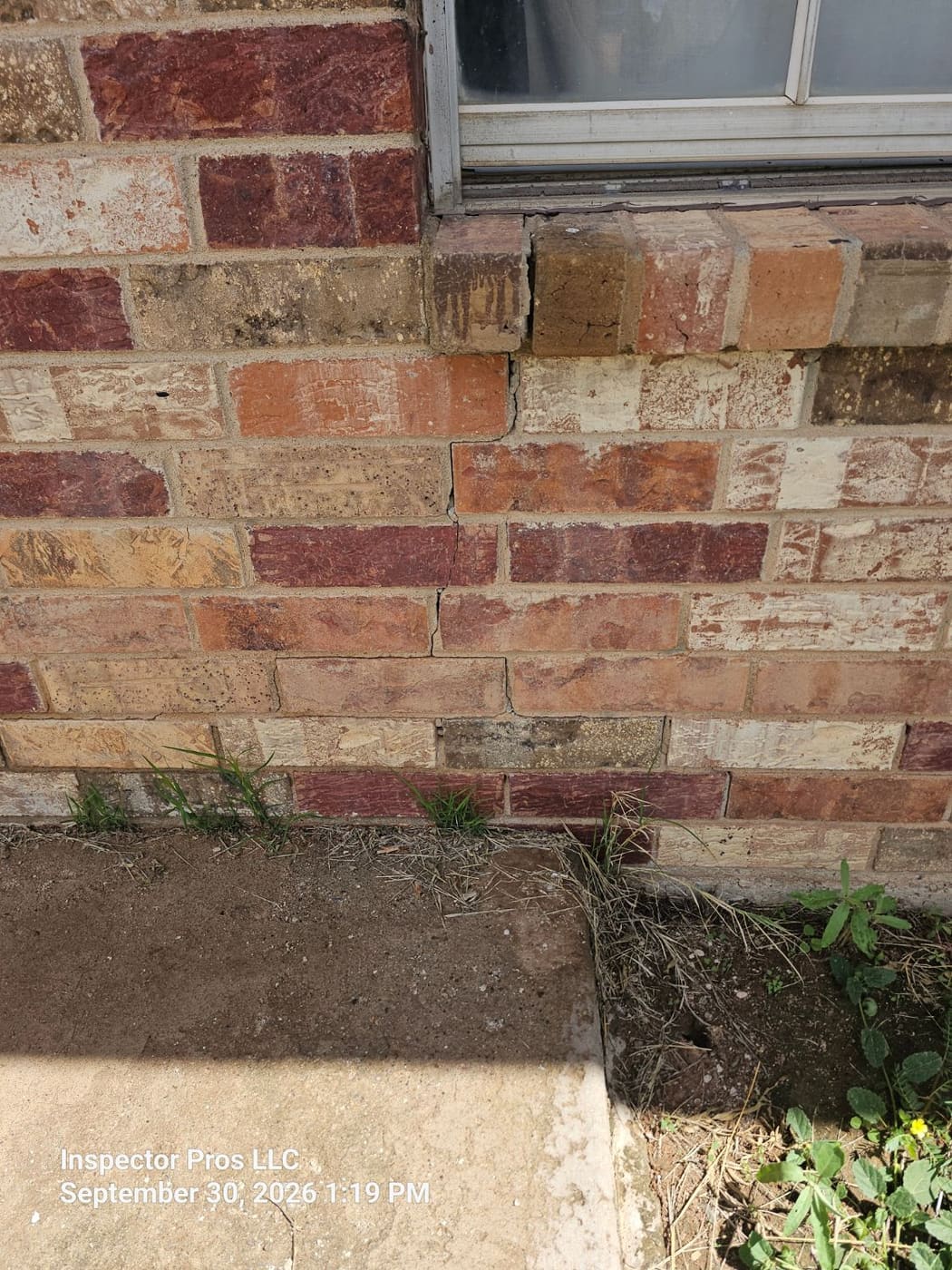
The cracking was not random. It followed a pattern around one side of the home: • A crack in the brick at the front of the house, on the right side. • A matching crack at the back of the house, directly across from it. • A much wider crack on the right side itself — more than an inch at its widest.
Front, back, and side, all on the same end of the building. That is the signature of one portion of the foundation moving relative to the rest, rather than isolated brick distress.
Cracking below a window opening, displacing the brick sill. Window and door openings are where veneer gives first. Inspector Pros, September 30, 2026.
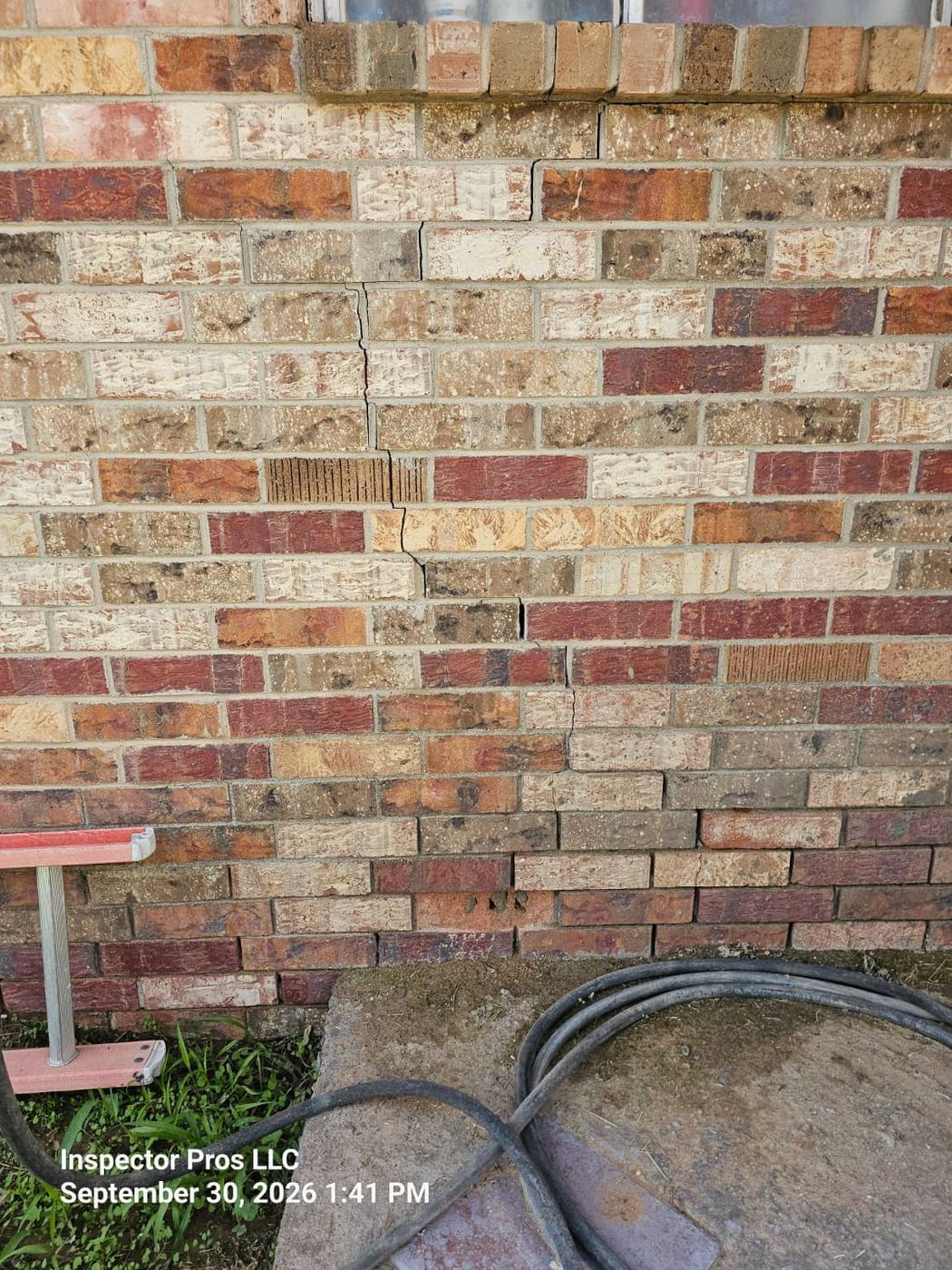
The matching crack on the opposite side of the house, running down from the window line on the same end of the building. Inspector Pros, September 30, 2026.
Stair-Stepped Through the Mortar, and Straight Through the Brick
Most veneer cracking in El Paso follows the mortar joints in a stair-step pattern, running up and over along the weakest path. That is what we saw across much of this wall.
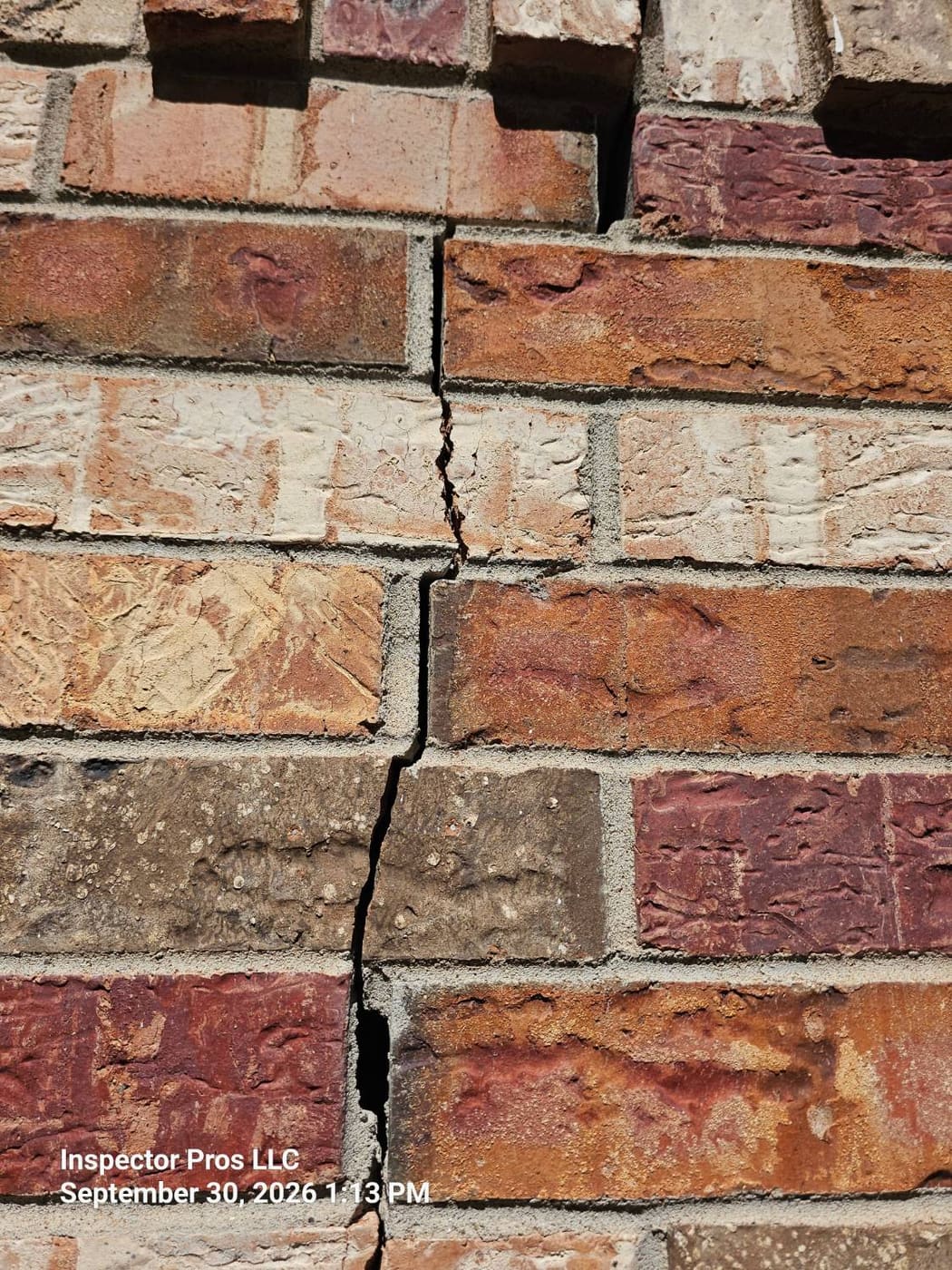
But the cracking also ran straight through individual bricks in places, and that distinction matters. Mortar is the sacrificial material. When the movement is strong enough that the brick itself fails instead of the joint around it, more force is involved than a typical seasonal hairline. Combined with a crack over an inch wide, that moves the finding out of the monitor-it category.
Close up, the crack steps through the mortar in places and splits the brick itself in others. Mortar is the sacrificial material; when the brick breaks instead, more force is involved. Inspector Pros, September 30, 2026.
The same wall a few feet over, where the crack follows the mortar joints in the classic stair-step pattern. Inspector Pros, September 30, 2026.
The Rock Wall Is the Part Most People Walk Past
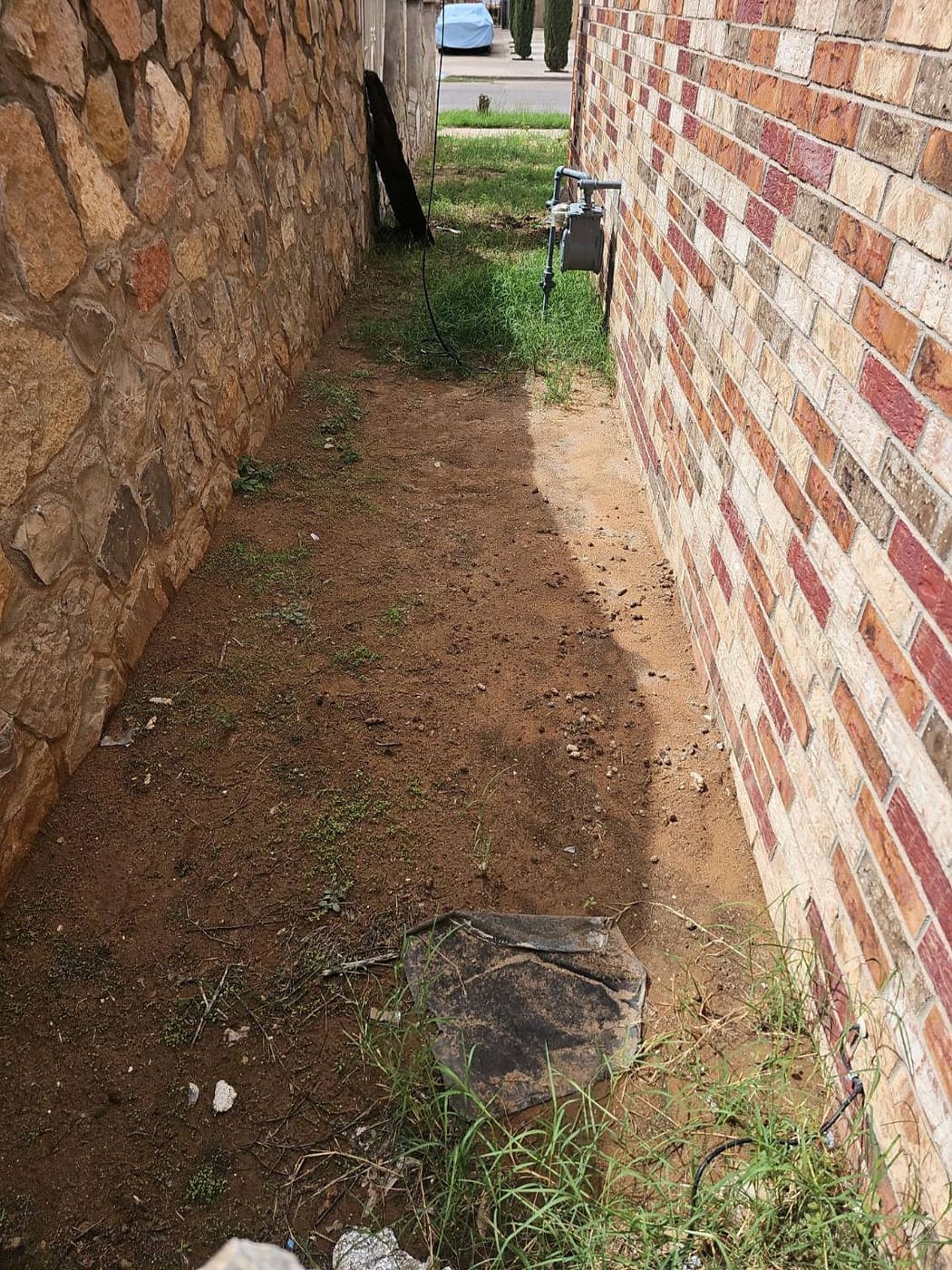
A yard wall is not attached to the house structure. It has its own footing, carries no roof load, and does not share framing. So when a rock wall cracks through in line with the cracking on the adjacent side of the home, the house and the wall are telling you the same thing from two independent sources: the soil under that side of the property has moved.
This is one of the reasons we walk the entire lot, not just the building. Yard walls, flatwork, driveways, and patios often show ground movement earlier and more plainly than the house does, because they are thin, rigid, and unreinforced compared to a slab.
The side yard: house on the right, stone boundary wall on the left. The wall is an independent structure sharing nothing with the home but the soil underneath it. Inspector Pros, September 30, 2026.
The Drainage Explains How It Got There
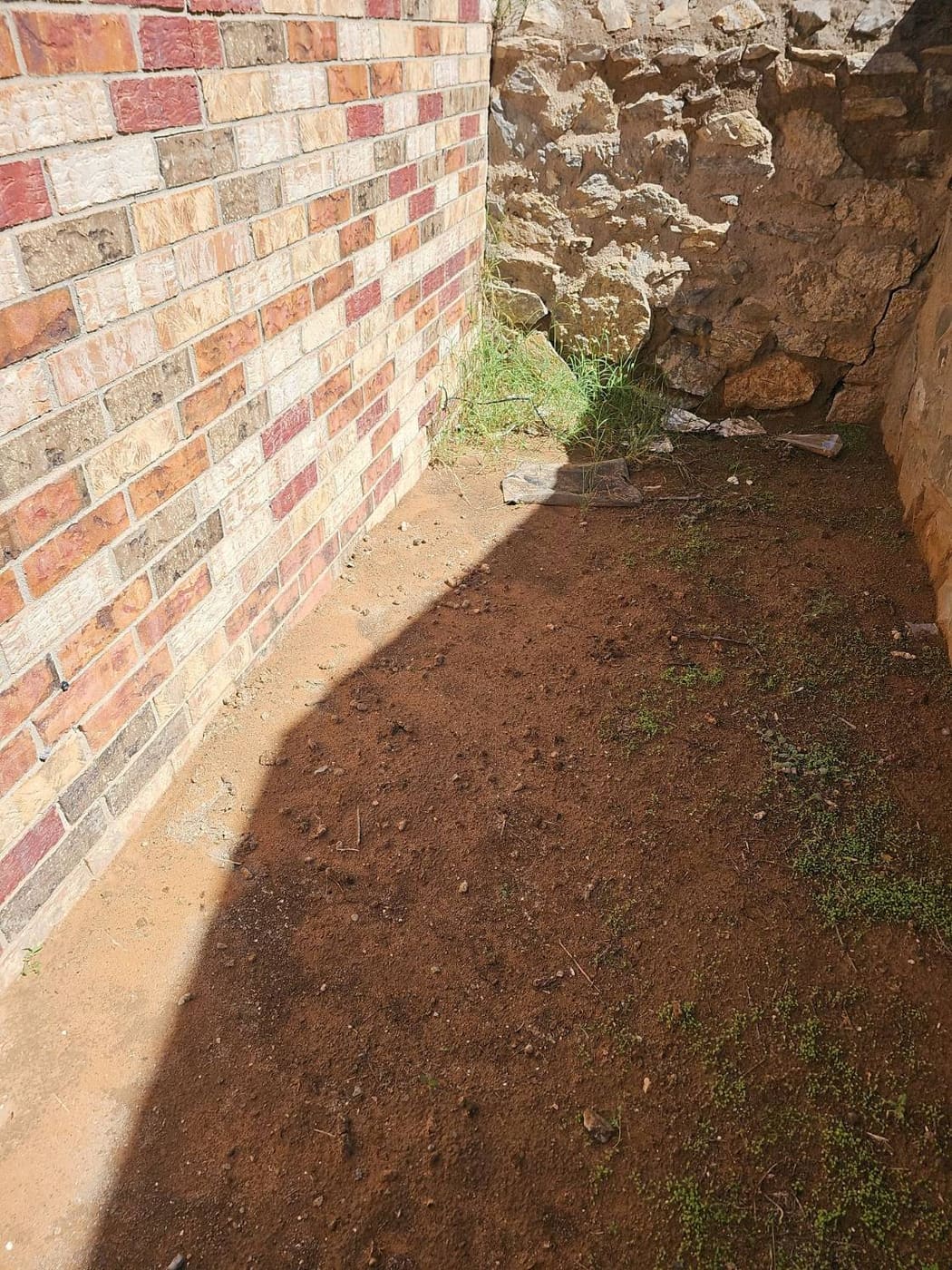
Soil moves when its moisture changes, and on this property every drainage detail was working against the foundation: • Flat grading all the way around. With no slope away from the building, storm water has nowhere to go but down alongside the foundation. • Planters built against the exterior wall. A planter at the wall is a container that holds water and irrigation right where you least want it, and it keeps that soil wet long after the rest of the yard has dried. • Negative grading at the back. The soil actually sloped toward the house, so runoff was directed at the foundation rather than away from it.
El Paso makes this worse than it sounds. We get most of our rain in a handful of monsoon storms, separated by long dry stretches. Soil that is repeatedly soaked and then baked out swells and shrinks, and the parts of the slab sitting on the wettest or driest soil move differently from the rest.
Bare, flat soil running right up to the brick with no slope away from the building. Water that lands here has nowhere to go but down alongside the foundation. Inspector Pros, September 30, 2026.
Inside the House, the Same Story
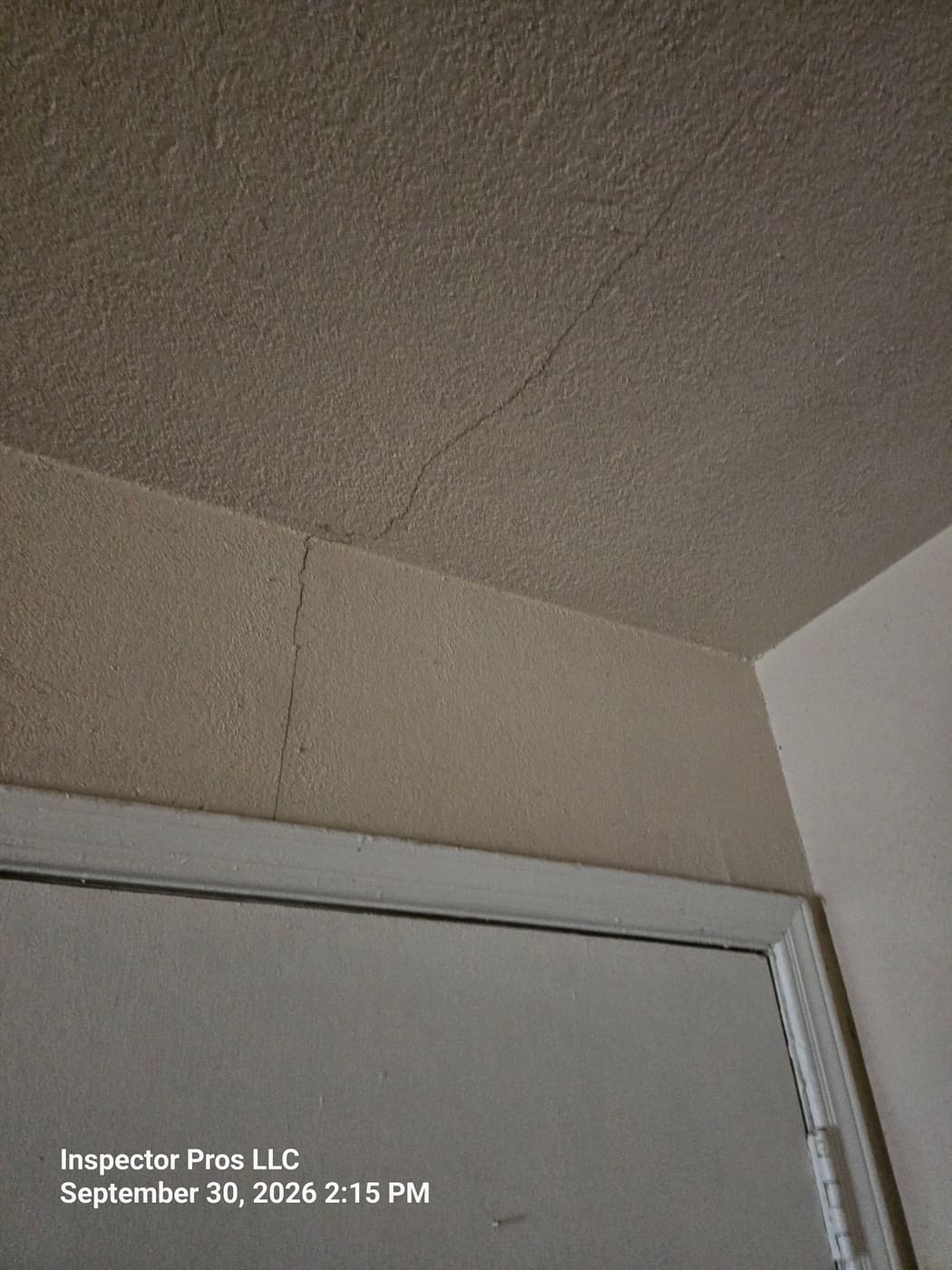
Exterior cracking alone is not conclusive. What raises the significance of a finding is whether the inside of the home agrees with the outside. Here it did: • Doors that stick and do not latch cleanly in their frames. • Diagonal drywall cracking at the corners of door openings — the classic place stress shows up first, because a door opening is a hole in an otherwise continuous wall.
Interior finish cracking has many possible causes, and one sticking door means little on its own. A consistent pattern on the same end of the home as the exterior cracking is a different matter.
Inside the home, a crack running up from a door corner and across the ceiling line — the interior agreeing with what the brick showed outside. Inspector Pros, September 30, 2026.
Why 1979 Matters
The age of the home shapes what else we look at when we find movement. A home from this era in Northeast El Paso will typically have original drain lines, and drain piping is one of the first things affected when a slab moves — joints separate, lines take on a belly, and leaks under the slab then feed more water into the soil, which drives more movement. It becomes a loop.
On homes of this age with documented movement, a sewer scope inspection is worth adding. It is the only way to see the condition of the buried drain line, and it tells you whether the plumbing is part of the cause, part of the damage, or neither.
What This Means If You Are the Buyer
Documented foundation movement is not automatically a reason to walk away. In El Paso, a great many homes show evidence of movement that happened years ago and has since stabilized. The questions that actually matter are: • Is the movement active, or historical? • What is driving it, and can the drainage that feeds it be corrected? • What, if anything, needs to be repaired, and in what order?
A home inspection documents conditions. It is a visual, non-invasive evaluation, and it is not an engineering evaluation — determining whether movement is active and what should be done about it is the work of a licensed structural engineer. Inspector Pros does not provide engineering services, but when our inspectors document foundation concerns, we can coordinate a foundation evaluation performed by a licensed structural engineer so you get that answer inside your option period.
One piece of advice we give every buyer in this situation: get the engineer's opinion before you get a repair contractor's estimate. An engineer has no financial stake in whether your home needs piers. A company that sells piers does.
If You Already Own the Home
Most of what caused this is fixable, and fixing drainage is almost always where an engineer starts: • Regrade so the soil slopes away from the foundation on every side. • Remove or rebuild planters that sit against the exterior wall, and move irrigation away from the slab perimeter. • Make sure canales, scuppers, and downspouts discharge well away from the house instead of at its base. • Keep soil moisture as steady as you can through the monsoon-to-dry-season swing, rather than soaking and baking it. • Repair plumbing leaks promptly, and scope the drain line if the home is older and showing movement.
Correcting water management does not undo movement that already happened, but it addresses the mechanism that keeps it going.
Inspector Pros inspects homes throughout Northeast El Paso, the West Side, the East Side, Horizon City, Las Cruces NM, and surrounding communities, 7 days a week. Infrared thermal imaging is included on every inspection at no extra charge. Call or text (915) 209-2332, or schedule online.
Frequently Asked Questions
Is a one-inch crack in brick veneer serious?
A crack that wide is well beyond normal seasonal movement and warrants evaluation, especially when it appears with matching cracks elsewhere on the same side of the home. Width alone does not tell the whole story — the pattern, whether the crack runs through the brick itself, and whether the interior shows related damage all matter — but a crack over an inch should always be looked at by a licensed structural engineer.
What is the difference between stair-step cracking and a crack through the brick?
Stair-step cracking follows the mortar joints, which are the weakest path, and is the most common pattern in brick veneer. When a crack runs straight through the bricks themselves, the brick failed before the mortar did, which generally indicates greater force. Seeing both patterns on the same wall, as we did here, points to meaningful movement rather than ordinary settling.
Why would a yard wall crack if the house foundation is moving?
A yard or rock wall is a separate structure with its own footing, so it shares nothing with the house except the soil beneath it. When it cracks in line with cracking on the house, both are responding to the same ground movement. Yard walls, driveways, and patios often reveal soil movement earlier than the home itself because they are thin, rigid, and unreinforced.
Can poor drainage really cause foundation problems in the desert?
Yes, and in some ways the desert makes it worse. El Paso gets most of its rain in a few intense storms separated by long dry periods, so soil around a foundation swings between saturated and bone dry. Flat or negative grading, planters against the wall, and downspouts discharging at the foundation concentrate that moisture in specific spots, which is exactly what produces differential movement.
Does a home inspector determine whether foundation movement is active?
No. A home inspection is a visual, non-invasive evaluation that documents the conditions observed. Determining whether movement is ongoing, what is causing it, and what repairs are appropriate requires a licensed structural engineer. Inspector Pros does not provide engineering services, but can coordinate an evaluation by a licensed structural engineer when foundation concerns are documented.
Should I get an engineer or a foundation repair company first?
An engineer first. A licensed structural engineer provides an independent opinion on whether repair is needed at all, and many homes need drainage corrections rather than structural repair. Foundation repair companies are in the business of selling repairs, so their evaluation starts from a different place.
Should I walk away from a house with foundation movement?
Not necessarily. Many El Paso homes show evidence of past movement that has since stabilized, and some findings are addressed with drainage work. What you need before deciding is an engineer's opinion on whether the movement is active and what it would take to address, obtained while you are still inside your option period so you can negotiate or withdraw.