Two New Homes, Same Builder, Same Day: Why We Sewer Scope New Construction
A soda can and dirt blocking the lateral on a brand-new Horizon City home. Sewage backing up through the toilets on a brand-new Santa Teresa home. Both found before closing, on the same day.
Written by John Raley, CMI — Certified Master Inspector · Texas Professional Real Estate Inspector · ICC Residential Building Inspector
The most common thing buyers tell us about sewer scopes on new construction is some version of: the house has never been lived in, so what could be wrong with the drain line?
Here is one day of answers. Both homes were brand new, both inspections were before closing, and both were built by the same builder on opposite sides of the region — one in Horizon City, one in Santa Teresa.
Morning, Horizon City: The Camera Would Not Go
We opened the cleanout at the front of the house and started the camera toward the street. It stopped.
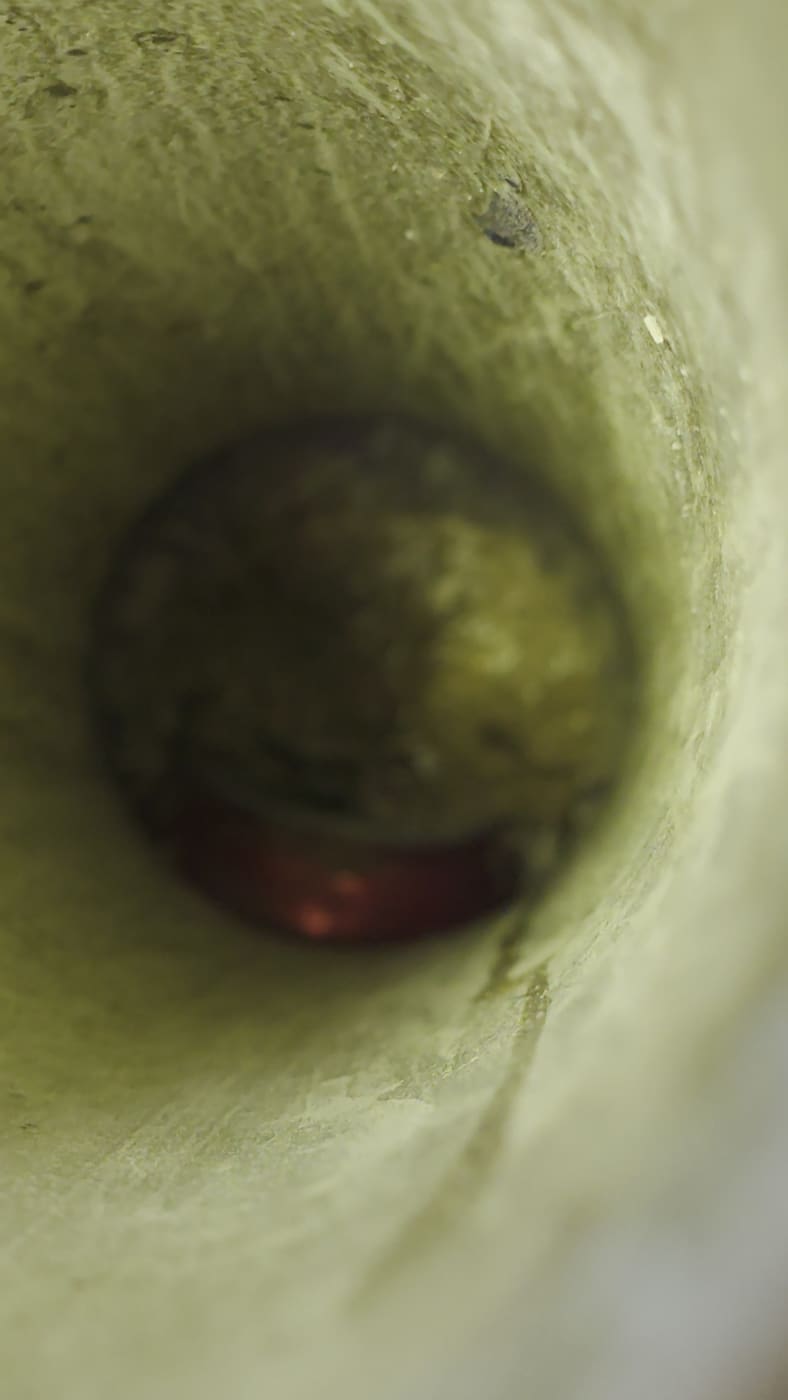
What we were looking at down the lateral was a soda can, packed in with dirt.
Looking down the lateral: a soda can packed in with dirt. The camera could not pass it, and neither could the home's wastewater. Inspector Pros, October 20, 2026.
The camera could not get past it, which is itself the finding: if a sewer camera cannot pass, neither can what the house is going to send down that line. A can and a load of dirt sitting in a brand-new lateral did not arrive by accident after closing. That is construction debris, left in an open pipe during the build.
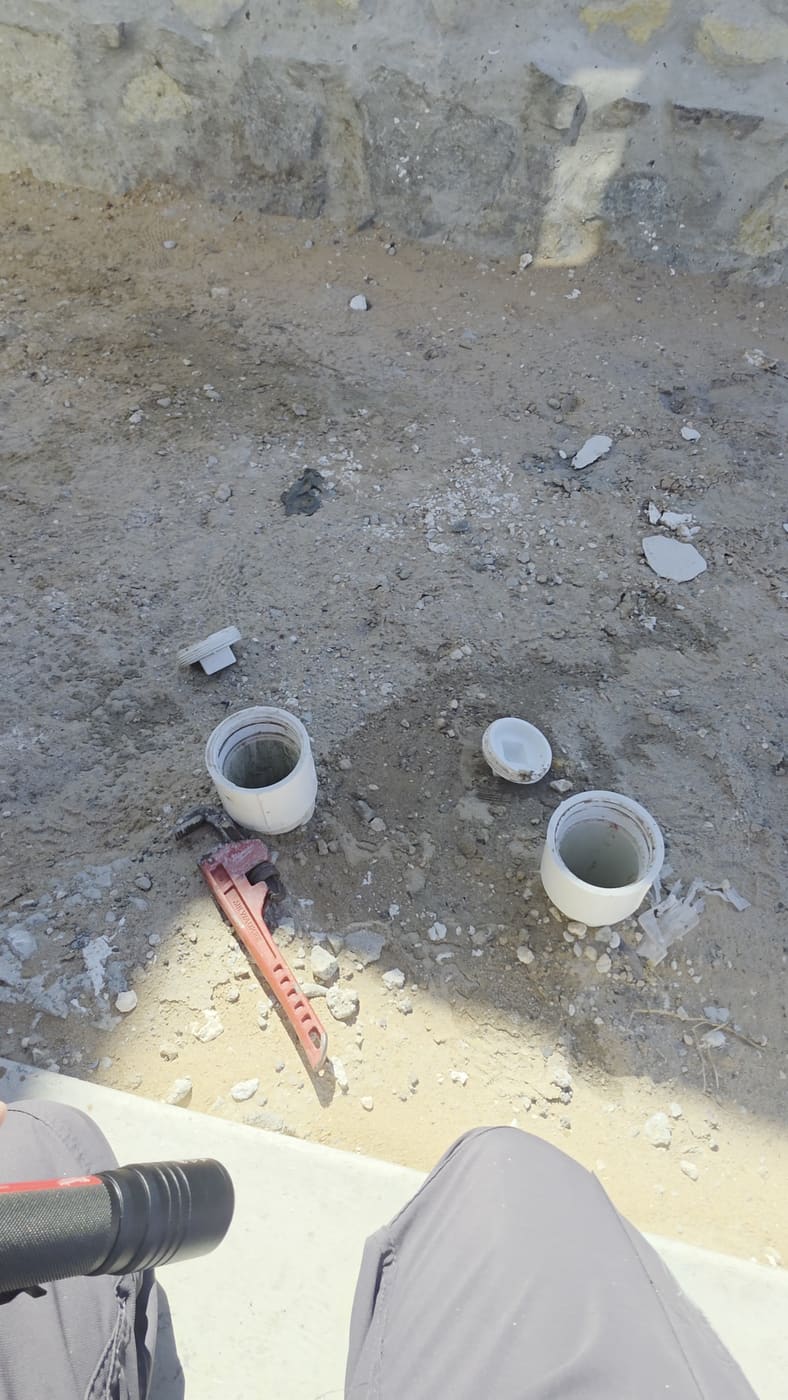
During construction, a sewer lateral spends weeks as an open hole in the ground on an active site with multiple trades working around it. Cans, cups, gloves, scraps, and plain dirt and sand from backfill all end up in lines that nobody closed off. The house above it can be finished, cleaned, and beautiful while the line underneath it is packed.
The cleanouts at the front of the new build. During construction the lateral spends weeks as an open pipe on an active site. Inspector Pros, October 20, 2026.
That Afternoon, Santa Teresa: Water Came Up Through the Toilets
Different house, different state line, same builder, a few hours later.
On every inspection we fill the tubs and let them drain at once. That is a deliberate volume test. Running a faucet for a few seconds tells you almost nothing — a partially blocked line will carry a trickle just fine. Dumping full tubs sends enough water at once that the drain system has to actually perform.
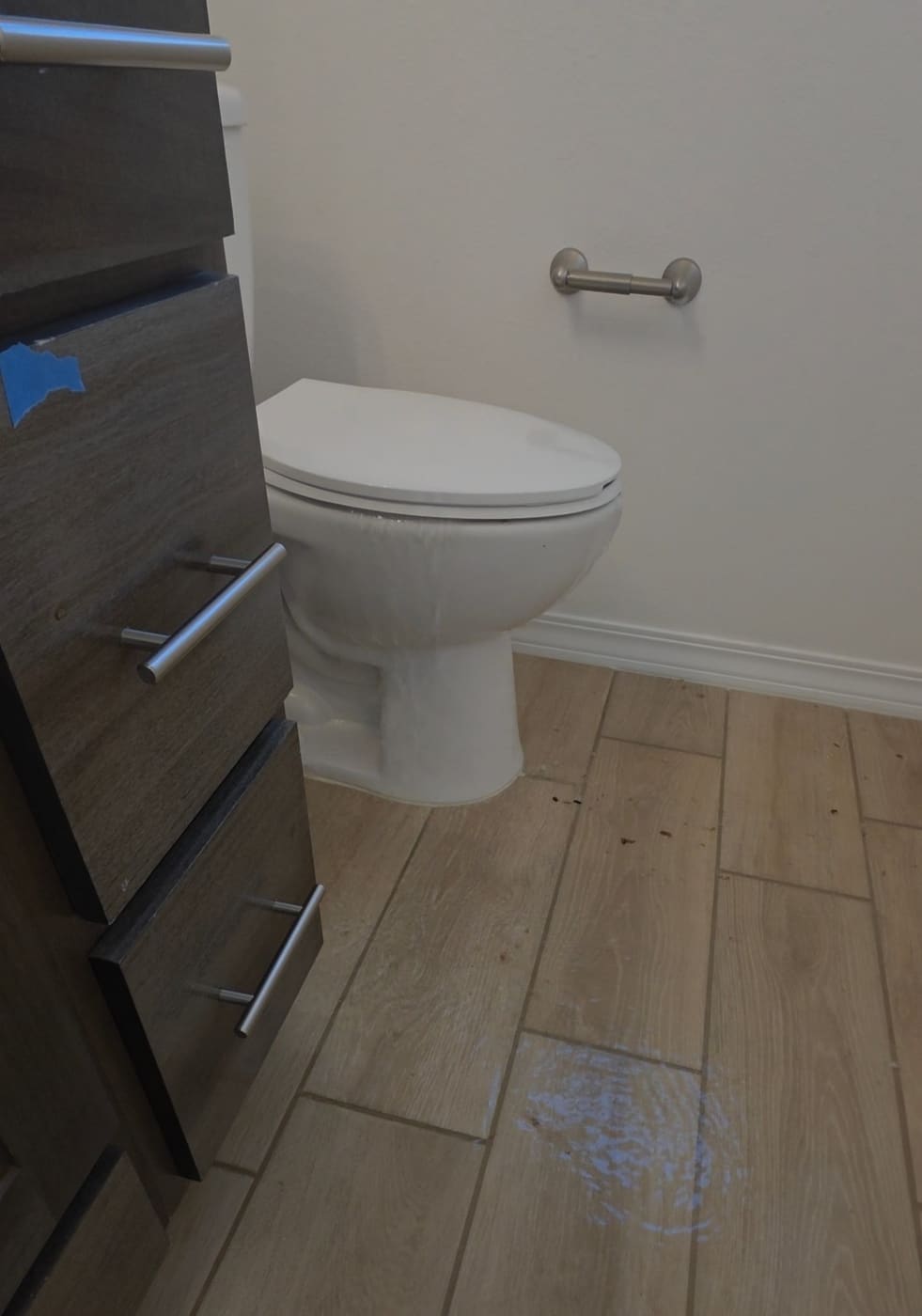
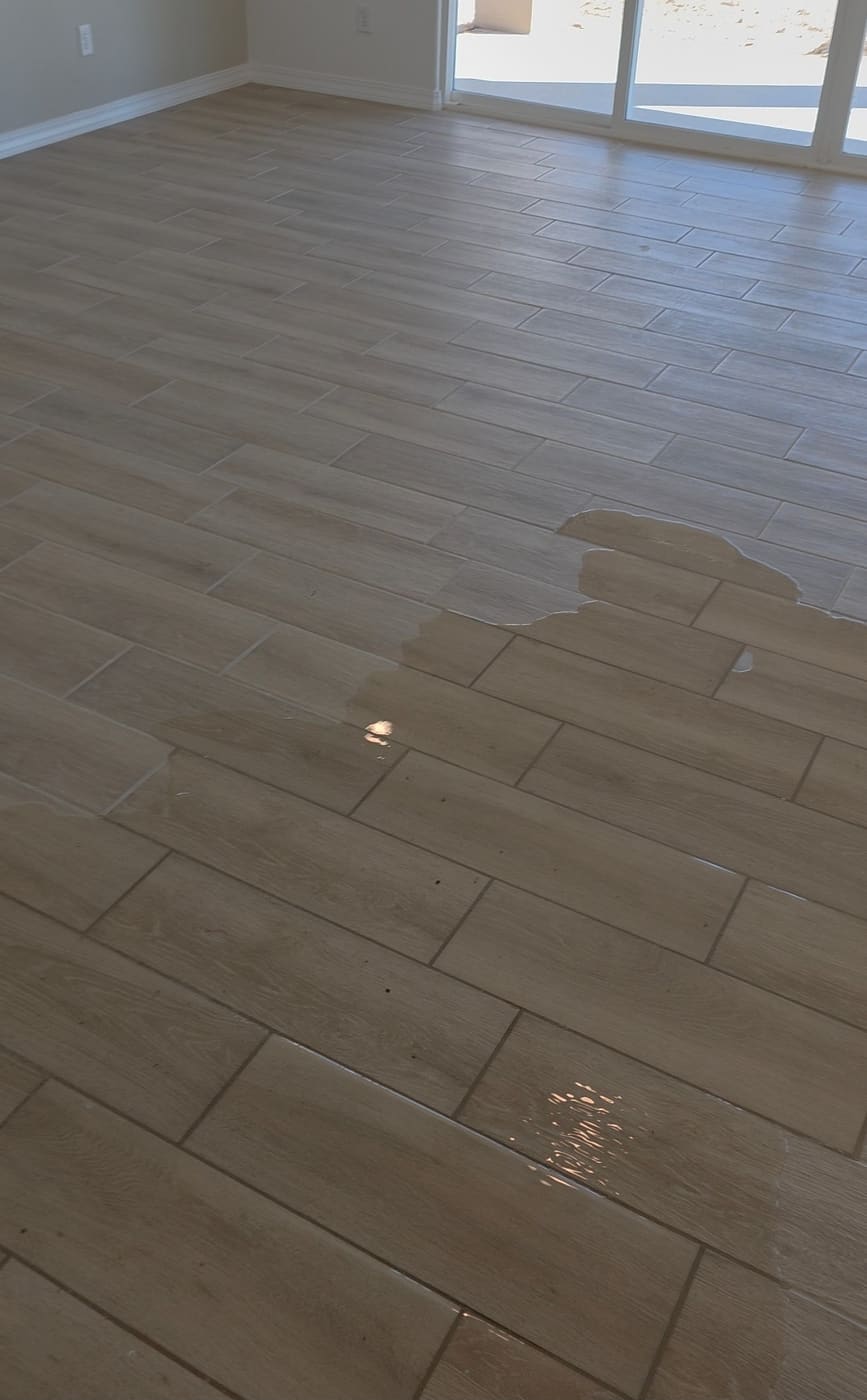
The water went down. Then it came back up through the toilets, onto the bathroom floor, and out across the carpet.
The toilet overflowing in the new build. Nothing had ever pushed enough water through the house to reveal the blockage. Inspector Pros, October 20, 2026.
The aftermath, several rooms away. This is what the drain system does when the lateral cannot take the volume. Inspector Pros, October 20, 2026.
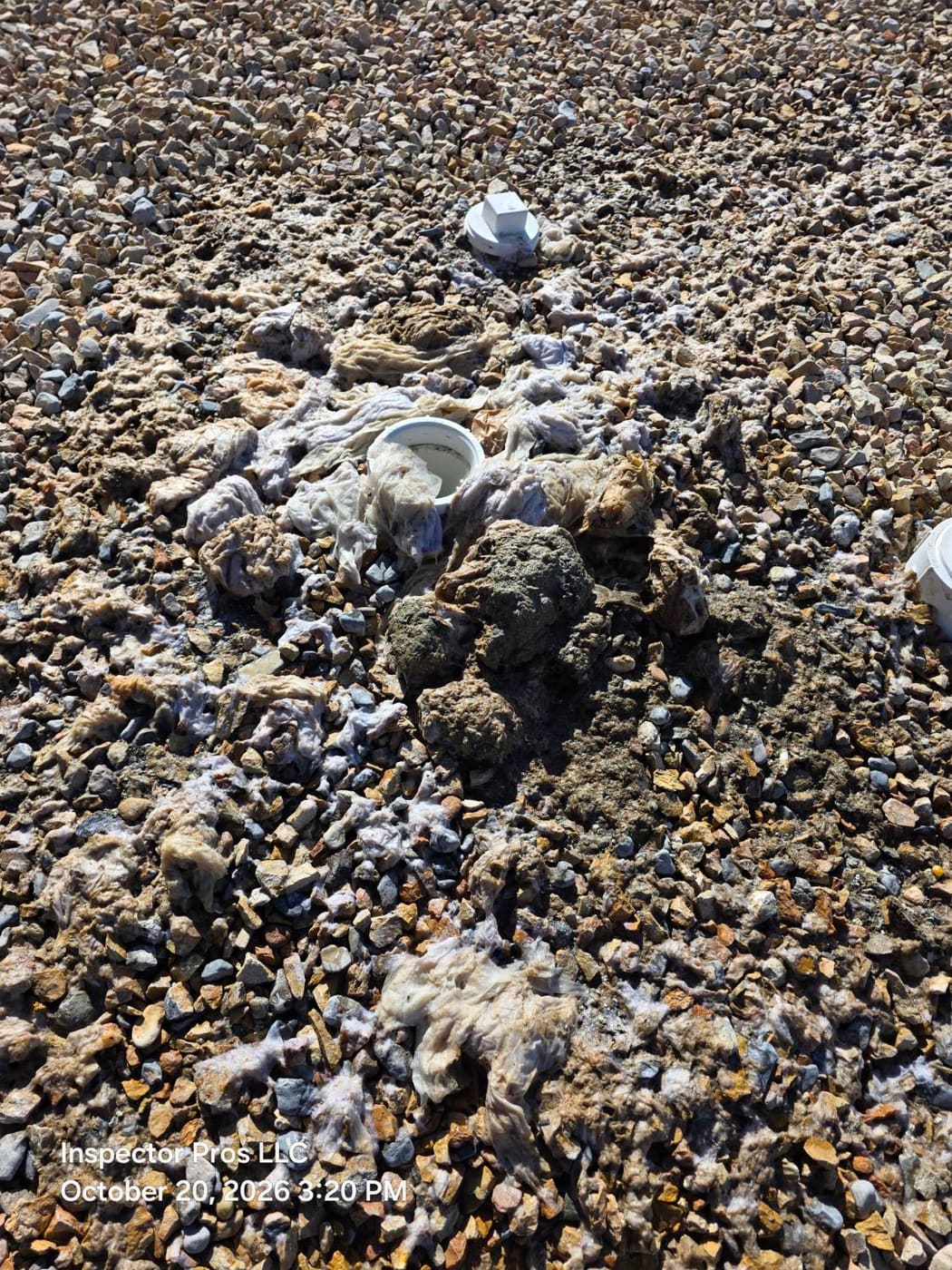
We opened the cleanout outside. What came out of it was paper, debris, and sewage.
What came out of the cleanout when we opened it. The lateral on this brand-new home was clogged. Inspector Pros, October 20, 2026.
The lateral was clogged. On a house nobody had moved into yet.
The buyers had no idea. Nothing in the home looked wrong, because nothing had ever pushed enough water through it to find out.
Why a Walkthrough Does Not Catch This
A builder walkthrough typically involves flushing a toilet, running a faucet, checking that fixtures work. All of that passes with a partially blocked lateral. So does a quick home inspection that never tests volume.
The failure mode only appears when the system is loaded: several fixtures draining at once, the way a household actually uses a house on a weekday morning. That is why we fill tubs rather than run taps, and it is why that test belongs on a new home as much as a fifty-year-old one.
The alternative is finding out on the first morning in your new house, when the family takes back-to-back showers and the toilets start backing up onto a floor you now own.
What Happens After the Finding
In both cases the builder cleans the line. That is the correct outcome: a blocked lateral on a pre-closing inspection is the builder's responsibility, and this is exactly the kind of item that gets resolved quickly when it is documented before you sign.
Then we go back and check. That part matters as much as the original finding. "The line was cleared" is a claim until a camera shows clear pipe to the street. Verification is the difference between a resolved item and a resolved-sounding item.
If you take one thing from this: when a builder fixes a documented defect, re-inspect it. Not because builders are dishonest, but because the person who tells you it was fixed is usually not the person who fixed it.
What a Sewer Scope Actually Shows
A sewer scope runs a camera from a cleanout through the lateral toward the municipal main or septic connection. On new construction it reveals: • Construction debris — cans, cups, gloves, lumber scraps, grout, concrete, and the dirt and sand that washes in through open pipe. • Blockages and bellies — low spots that hold water, often from poor bedding or backfill compaction, which collect solids from the first week onward. • Improper slope or connections, including sections that were never properly joined. • Damage from the build itself, such as a line crushed or cracked by equipment during construction.
None of that is visible from inside the house, and none of it is covered by how clean the kitchen looks.
If You Are Buying New Construction in El Paso
Add a sewer scope to your new construction inspection before closing. The window when a builder is clearly responsible is the window before you sign, and a blocked lateral discovered then is their problem rather than your Saturday.
If you already closed, you still have the 11-month warranty inspection — the last point at which most builder warranties still cover defects like this. A sewer scope can be added to either one.
And ask for volume testing by name. If your inspector is not filling tubs and draining them together, the drain system is not being tested, it is being glanced at.
Inspector Pros inspects new construction throughout Horizon City, El Paso TX, Santa Teresa, Sunland Park, Las Cruces NM, and surrounding communities, 7 days a week. Call or text (915) 209-2332, or schedule online.
Frequently Asked Questions
Does a brand-new home need a sewer scope?
Yes, and new construction has its own failure mode. During the build, the sewer lateral sits open on an active site, and construction debris, dirt, and sand end up inside it. On a single October day we found a soda can packed in dirt blocking the lateral on one new home and a clogged lateral backing sewage into the house on another, both pre-closing, both from the same builder.
What is a sewer scope inspection?
A camera is run from a cleanout through the sewer lateral toward the municipal main. It shows blockages, construction debris, low spots that hold water, improper slope, bad connections, and damage to the pipe — none of which can be seen from inside the house.
Why did filling the tubs make the toilets overflow?
Filling tubs and draining them at once is a volume test. A partially blocked lateral will carry a small flow from a single faucet without any symptom, but when several fixtures drain at once the blockage cannot pass the water, and it comes up at the lowest fixtures — usually the toilets.
Who pays to fix a blocked sewer line on a new home?
When the problem is documented before closing, it is the builder's responsibility, and in our experience it gets cleared quickly. After closing, it typically falls under the builder warranty, which is one reason the 11-month warranty inspection exists.
Should the line be re-inspected after the builder clears it?
Yes. "Cleared" is a claim until a camera confirms clear pipe to the street. We return and re-scope after the builder performs the work, because verification is what turns a resolved-sounding item into a resolved one.
Can I get a sewer scope before closing on new construction?
Yes. It is added to a new construction inspection and performed through the exterior cleanout, with no damage to the home and no disruption to the build. The pre-closing window is when builder responsibility is clearest.