Parapet Walls and Scuppers: Why El Paso Flat Roofs Leak During Monsoon Season
Most El Paso flat roof leaks do not start in the middle of the roof. They start at the parapet wall and the scuppers. Here is what a Certified Master Inspector checks after monsoon season.
Written by John Raley, CMI — Certified Master Inspector · Texas Professional Real Estate Inspector · ICC Residential Building Inspector
El Paso averages less than ten inches of rain a year, and a big share of it arrives in a handful of summer monsoon storms between July and September. A flat roof can sit dry for ten months and then take an inch of water in an afternoon. That is when we get the calls: a brown ring on the living room ceiling, a drip at the top of a window, or stucco that stays dark for days after the storm passes.
Most buyers assume a flat roof leaks in the middle. On the El Paso homes we inspect, it usually starts at the edges: the parapet wall, the flashing where the roof surface turns up the wall, and the scuppers that are supposed to carry the water off the roof. For a broader look at every roof type we see locally, start with El Paso Roof Inspection: What Home Inspectors Actually Find.
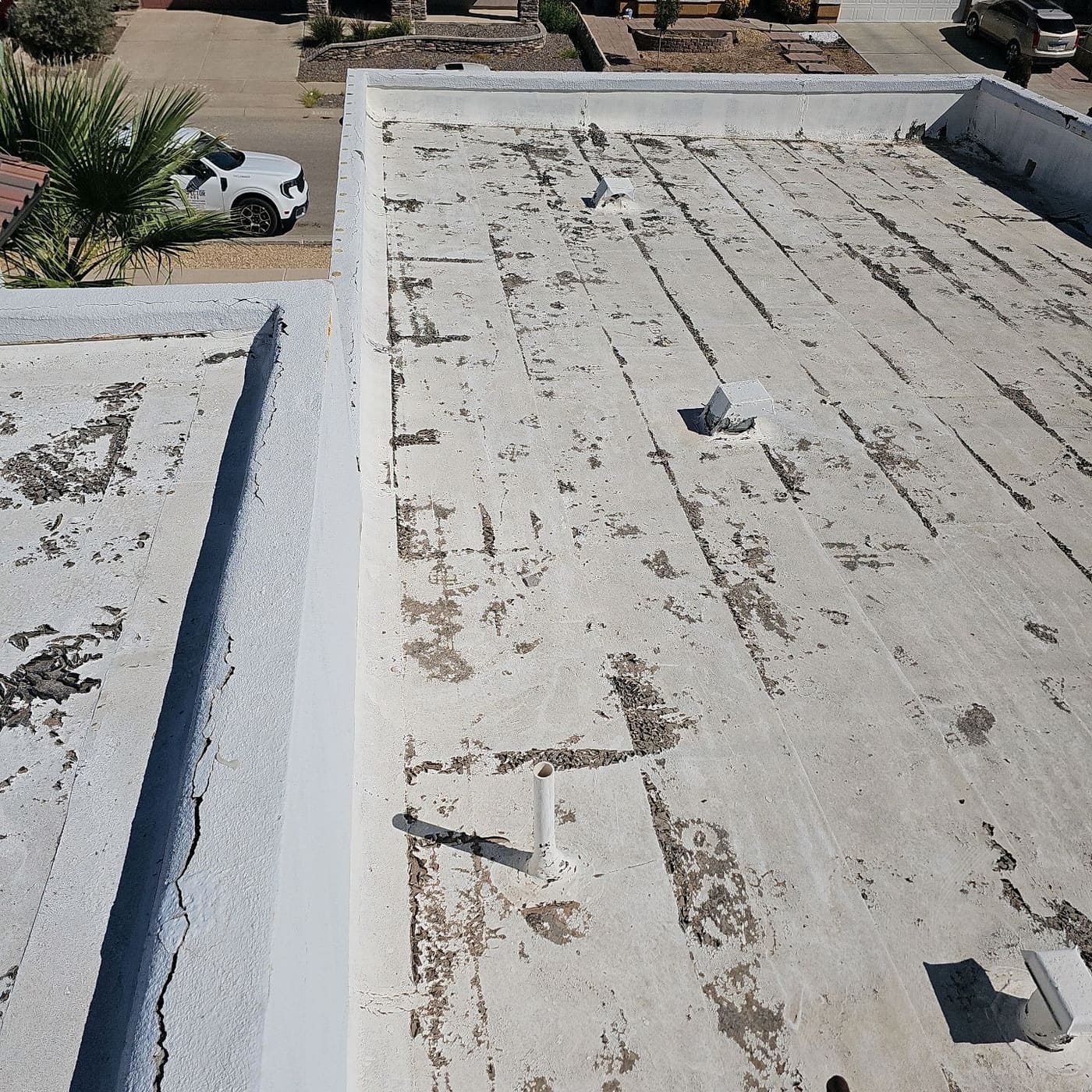
A typical El Paso flat roof: parapet walls on every side, roof vents and plumbing stacks through the surface, and a coating that has worn thin along the seams. Inspector Pros, September 11, 2026.
What a Parapet Wall Is and Why El Paso Has So Many
A parapet is the short wall that extends above the roof line around the edge of a flat roof. Parapets are especially common on homes built in the 2000s and newer across East El Paso, Northeast El Paso, and the West Side. Builders use them to give Southwest-style homes a clean, boxy look and to hide flat roof sections and rooftop equipment from the street.
Parapets look solid, but they are exposed on three sides: the outside face, the inside face that faces the roof, and the top. The roof itself is designed to shed water. A parapet has to keep water out from every direction, and it expands and contracts with every hot day and cold night El Paso throws at it.
Where the Water Actually Gets In
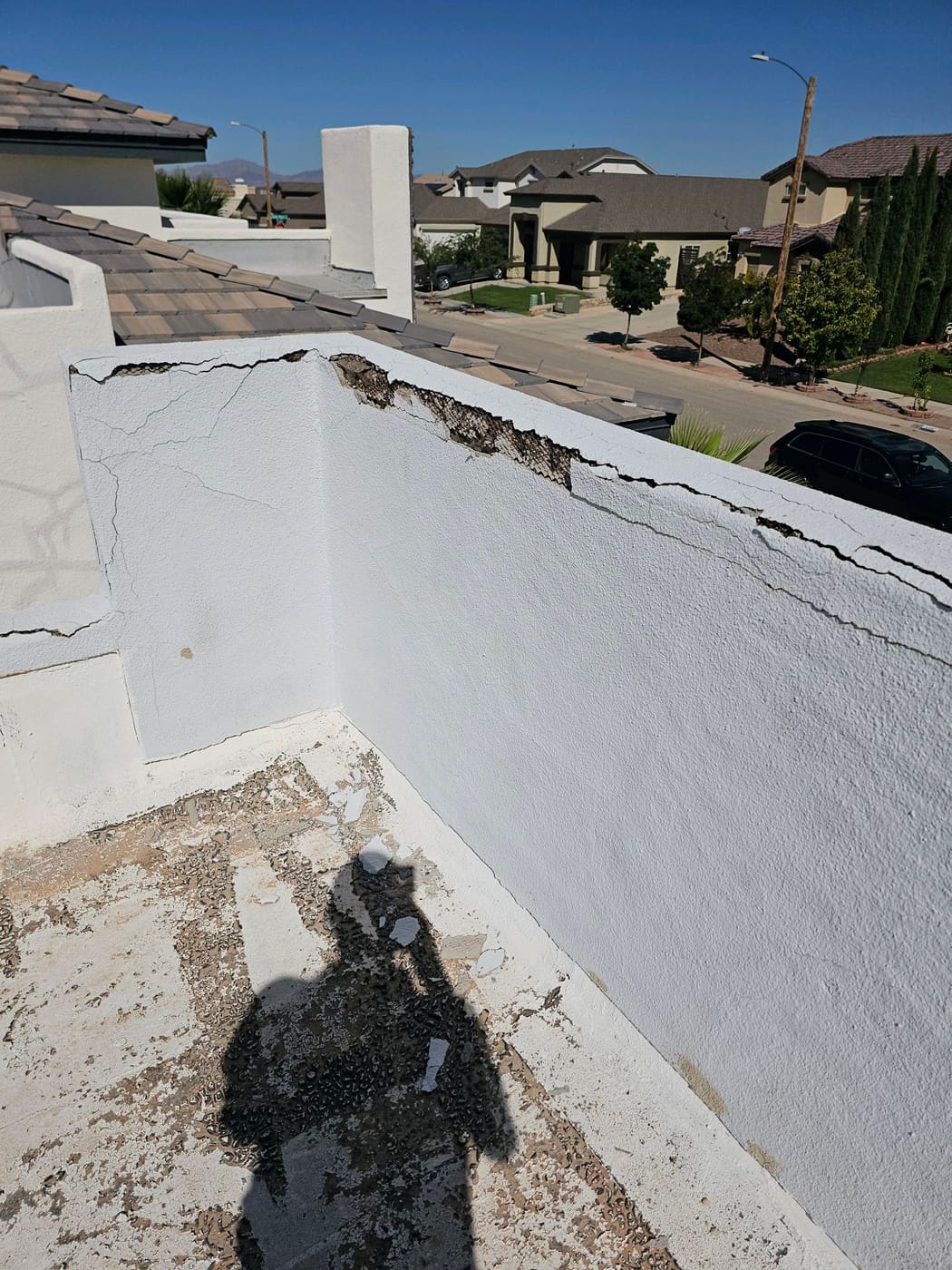
The top of the wall (the cap). The top of a parapet is flat or nearly flat, so water sits on it. If it is finished in stucco with no metal or tile cap, hairline cracks in that stucco let water straight down into the wall framing or block. We regularly find cracked, patched, and repainted parapet tops that have been leaking for years.
The stucco cap on this parapet has cracked open and broken away, exposing the metal lath underneath. Every rain sends water straight into the wall. Inspector Pros, September 11, 2026.
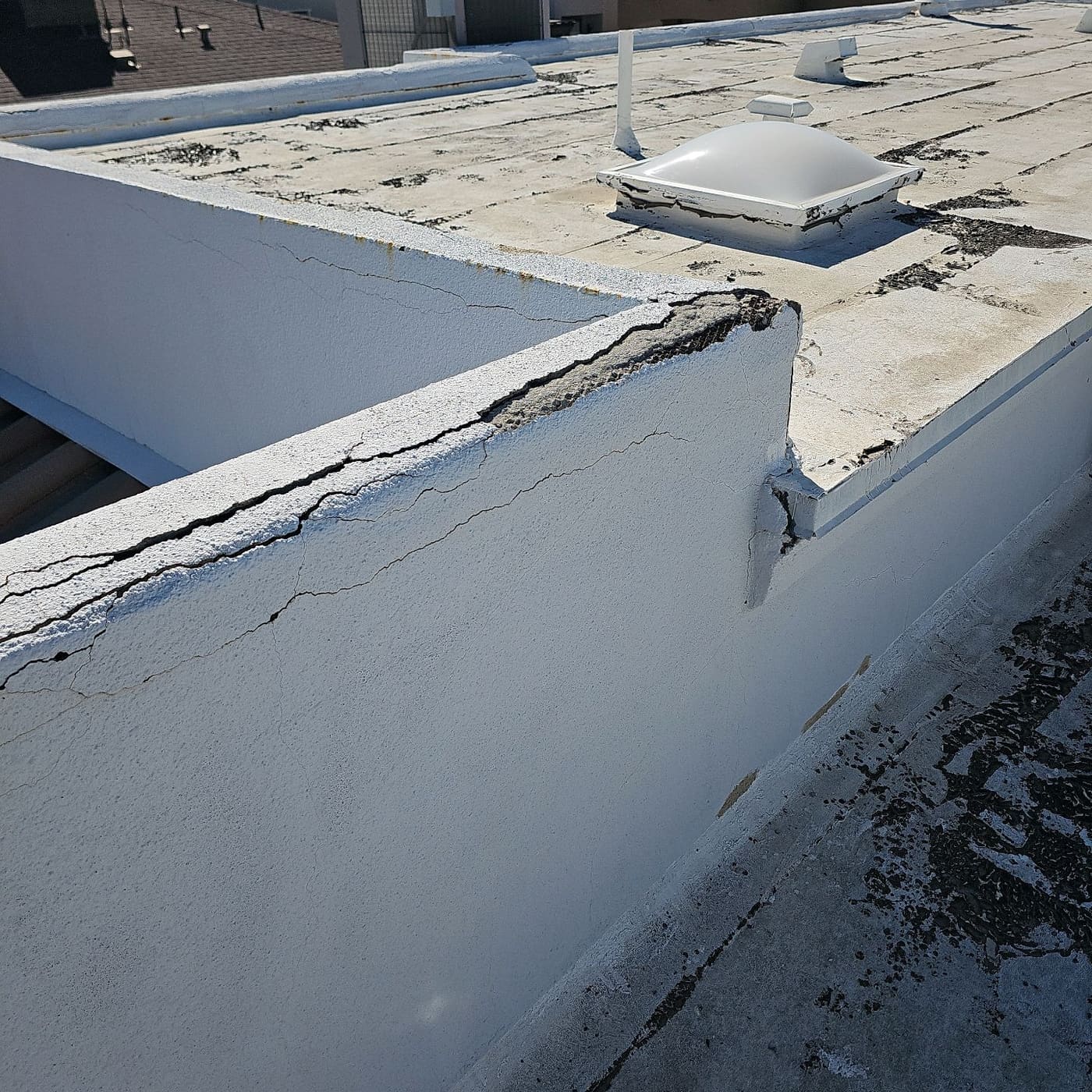
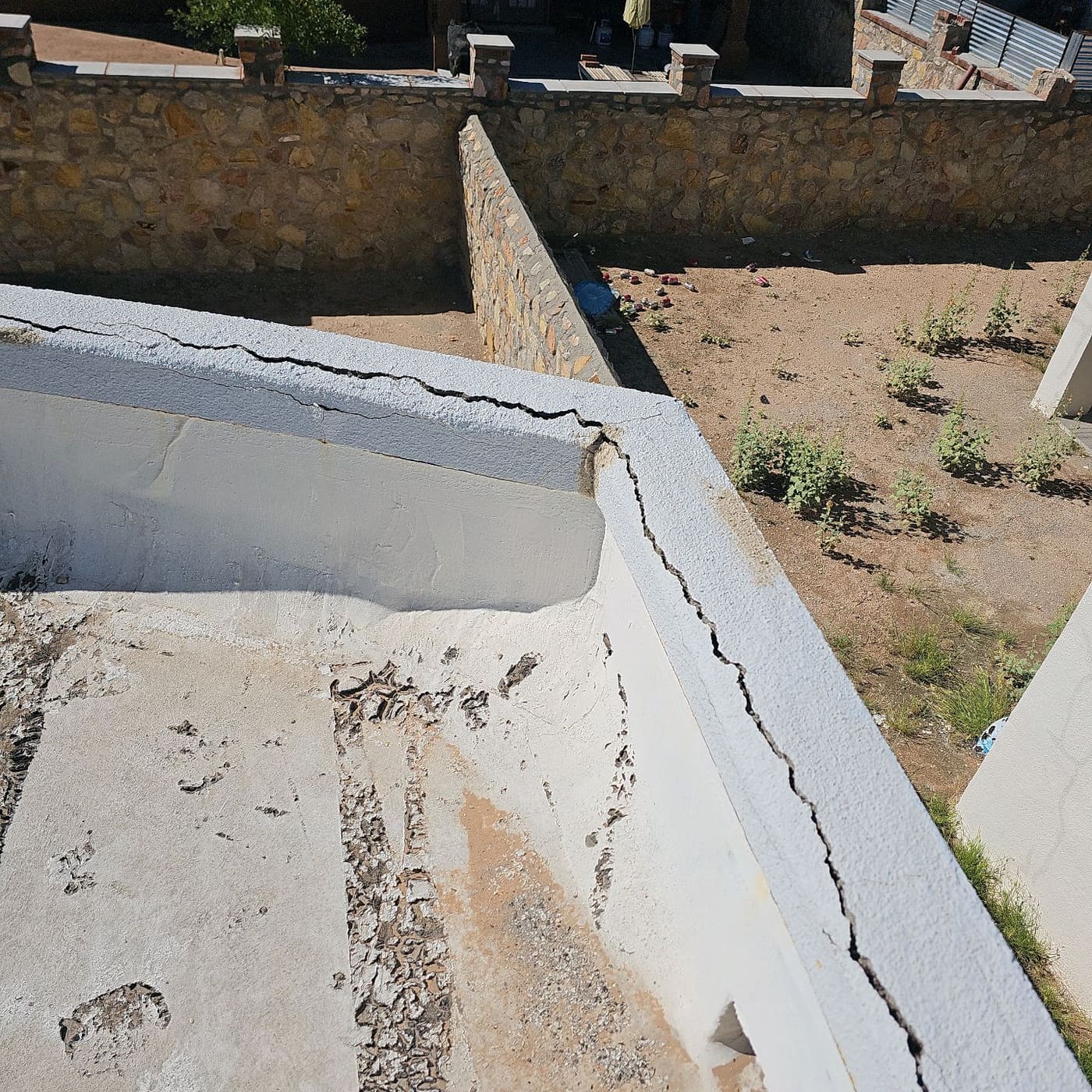
Cracking along the top and down the corner of a parapet, where it meets the lower roof. Note the cracked sealant around the skylight curb in the background, another common entry point. Inspector Pros, September 11, 2026.
The roof-to-wall joint. Where the roof membrane meets the parapet, it should turn up the wall and be protected by flashing and a counter-flashing or a sealed termination. When the membrane shrinks, the coating cracks, or the flashing pulls away, water runs down the inside face of the parapet and behind the roofing. This is the most common leak point we document on El Paso flat roofs.
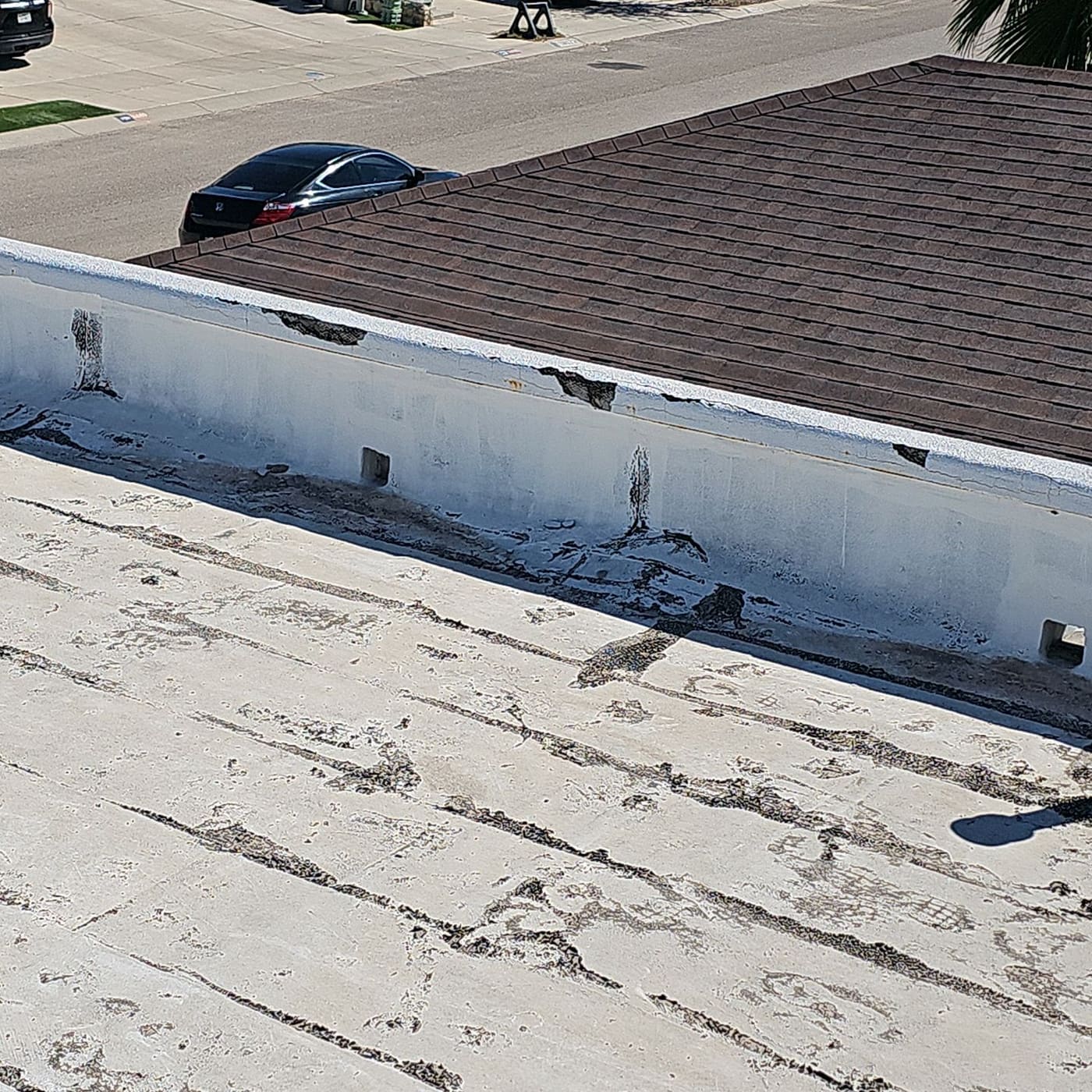
The inside face of this parapet shows old dark patches over cracks, chunks missing from the cap, and roofing that has worn through where it turns up the wall. Inspector Pros, September 11, 2026.
Stucco cracks on the inside face. The side of the parapet facing the roof takes the most sun and the least maintenance. Cracks there are easy to miss from the ground and often show up as staining or peeling paint on the ceiling below.
Scuppers and Canales: The Drain That Makes or Breaks a Flat Roof
A scupper is the opening at the base of the parapet that lets water flow off the roof. On many Pueblo and Territorial style homes, the scupper has a canale attached: a metal, clay, or wood spout that throws the water away from the wall. On a flat roof with parapets on every side, the scuppers are the only way out. If they do not work, the water has nowhere to go.
Here is what we check at every scupper: • Blockage. Leaves, tumbleweeds, dust, and roofing debris build up fast. One clogged scupper can turn a section of roof into a pond. • Slope toward the drain. Water should move toward the scupper. Low spots and ponding near it tell us the roof was not built or re-roofed with enough slope. • Sealing at the wall opening. The joint where the spout passes through the parapet is a common leak point, especially on older metal canales that have rusted or pulled loose. • Where the water lands. A short spout dumps water against the stucco and the foundation. Over time that shows up as stained or crumbling stucco below the scupper and soil erosion next to the slab.
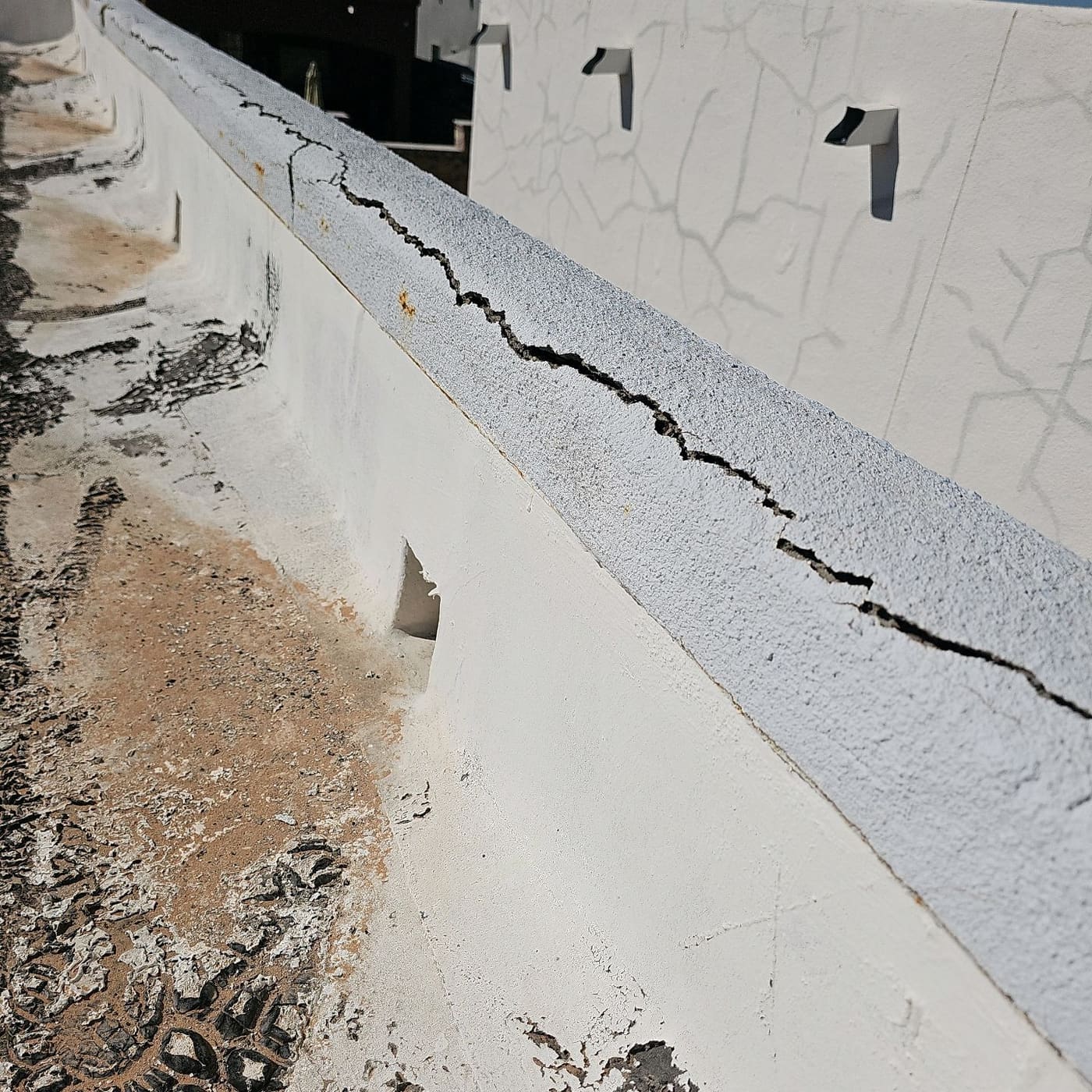
A crack running the length of the parapet cap, with scupper openings at the roof line. The tan sediment on the roof next to the wall shows where water sits before it drains. Inspector Pros, September 11, 2026.
New Construction: Scuppers Set Above the Roof's Drainage Plane
This one surprises buyers of brand-new homes. On many new builds we inspect in El Paso, the scupper opening in the parapet is set too high: the bottom of the opening sits above the roof's drainage plane, the surface where water is actually supposed to flow off. The roof looks finished and the scupper looks fine from the street, but water cannot reach the opening until it has already pooled on the roof deep enough to climb over the lip.
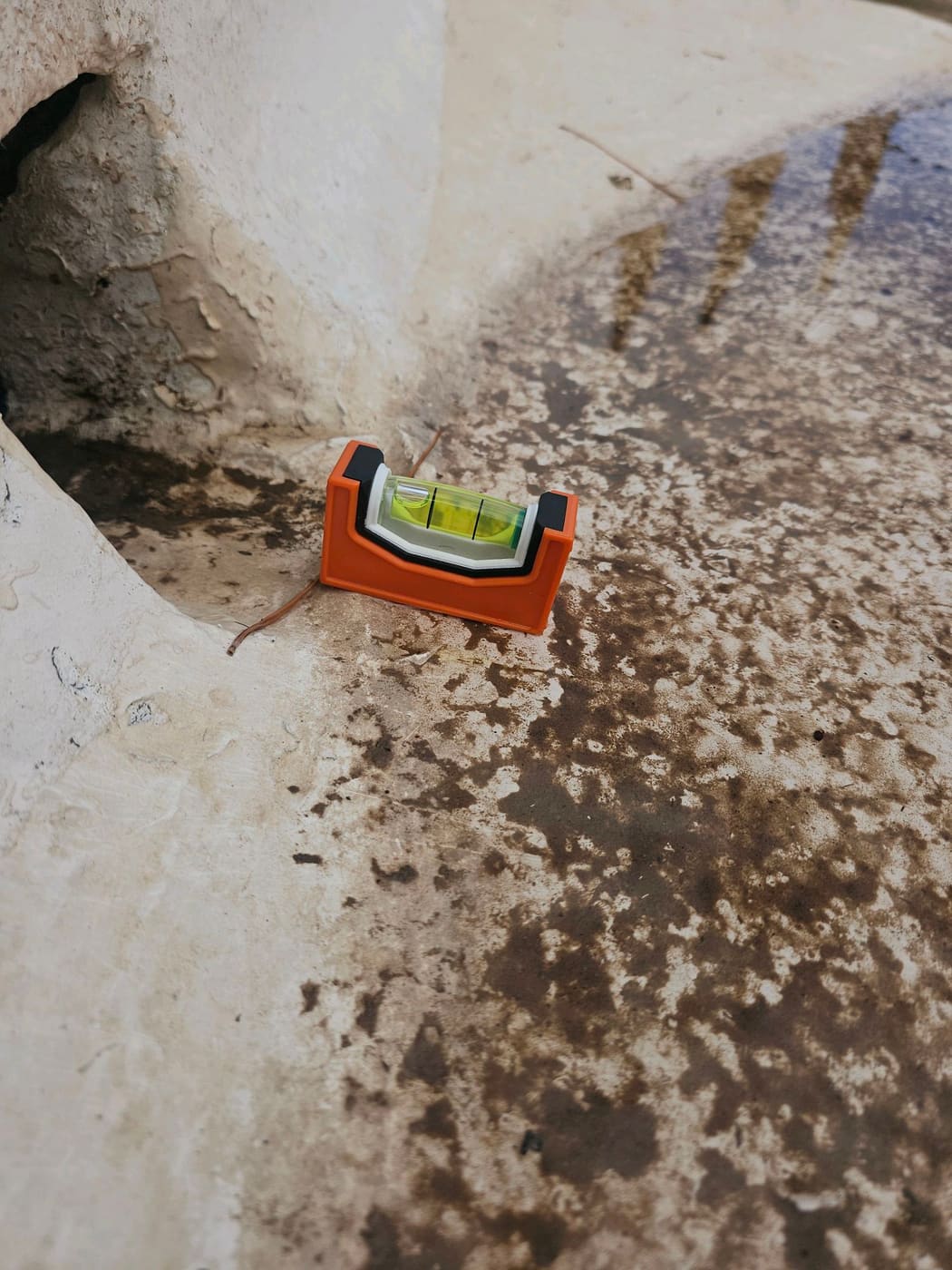
A level set at the scupper on a new construction home. The opening sits above the roof surface, so water and sediment collect in front of it instead of draining out. Inspector Pros, September 15, 2026.
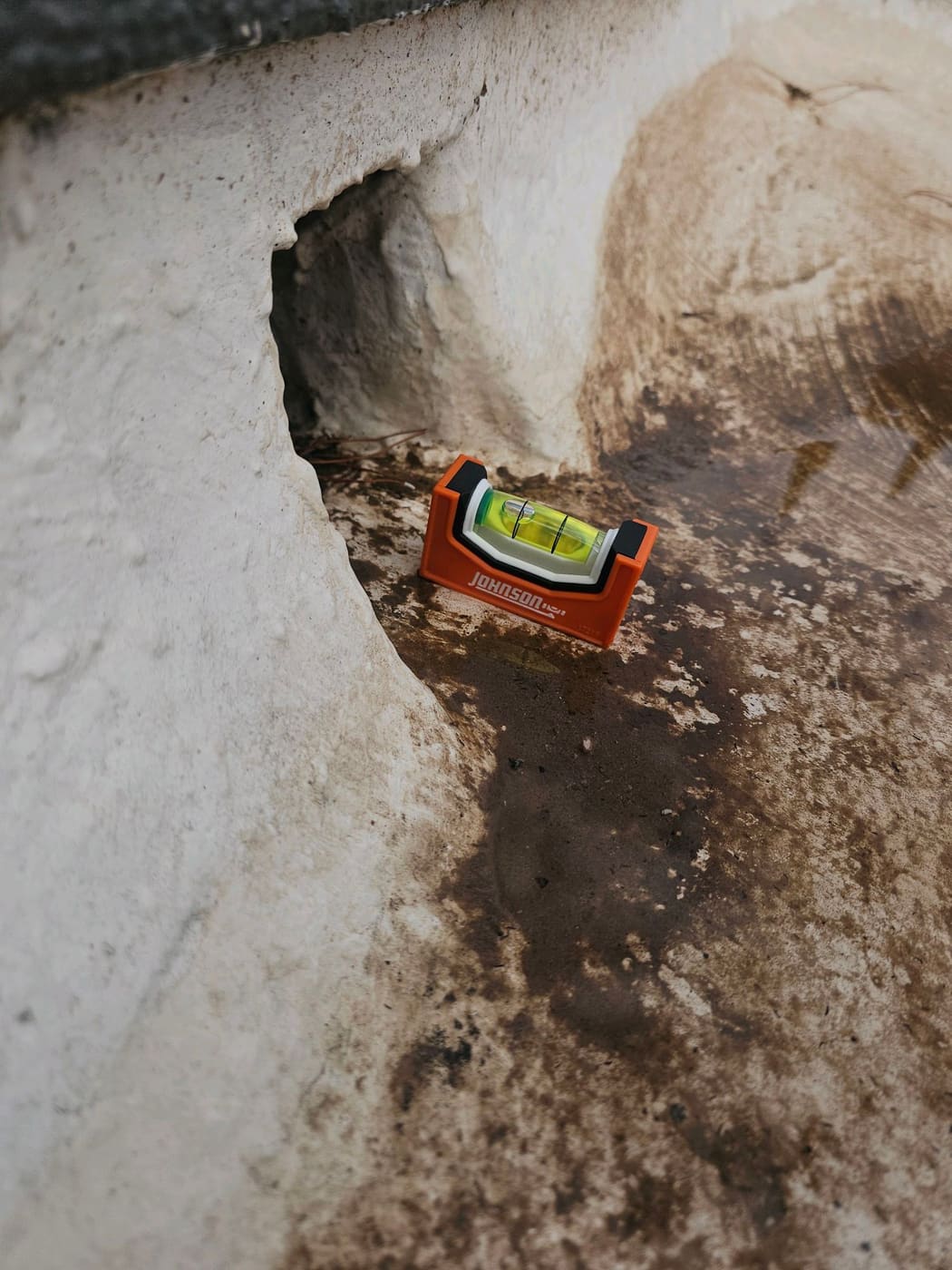
Another angle on the same condition: standing water and mud at the base of the scupper, below the lip of the opening. Inspector Pros, September 15, 2026.
The result is water that sits against the parapet and the roof-to-wall flashing after every storm, the exact spots where flat roofs are most likely to leak. The water that never makes it out evaporates slowly and leaves the same sediment rings you see on an older, neglected roof. On a new home, a detail like this may not cause a leak in year one, but it puts extra wear on the roofing and flashing from the first monsoon.
The good news is that new construction is the best time to catch it. A new construction inspection before closing gives you a documented finding to take to the builder, and an 11-month warranty inspection lets you check whether water is pooling at the scuppers after your first summer, while the builder warranty still covers the repair.
Ponding Water: The Monsoon Warning Sign
Water that is still standing on a flat roof 48 hours after a storm is ponding, and it is a drainage problem, not just a cosmetic one. Standing water breaks down roof coatings faster, adds weight to the structure, and keeps pushing on every small crack and seam. After the monsoon it leaves behind dried rings of dirt and sediment, which is how we can spot ponding even on a dry September inspection day.
Dried dirt and sediment collected in a low corner of the roof tell us water has been sitting here after storms, right against a cracked parapet. Inspector Pros, September 11, 2026.
Roof-mounted equipment makes this worse. Evaporative coolers and refrigerated air units sit on curbs or stands, and every penetration through the roof for ducts, lines, and supports is one more place for water to get in if the flashing is not maintained.
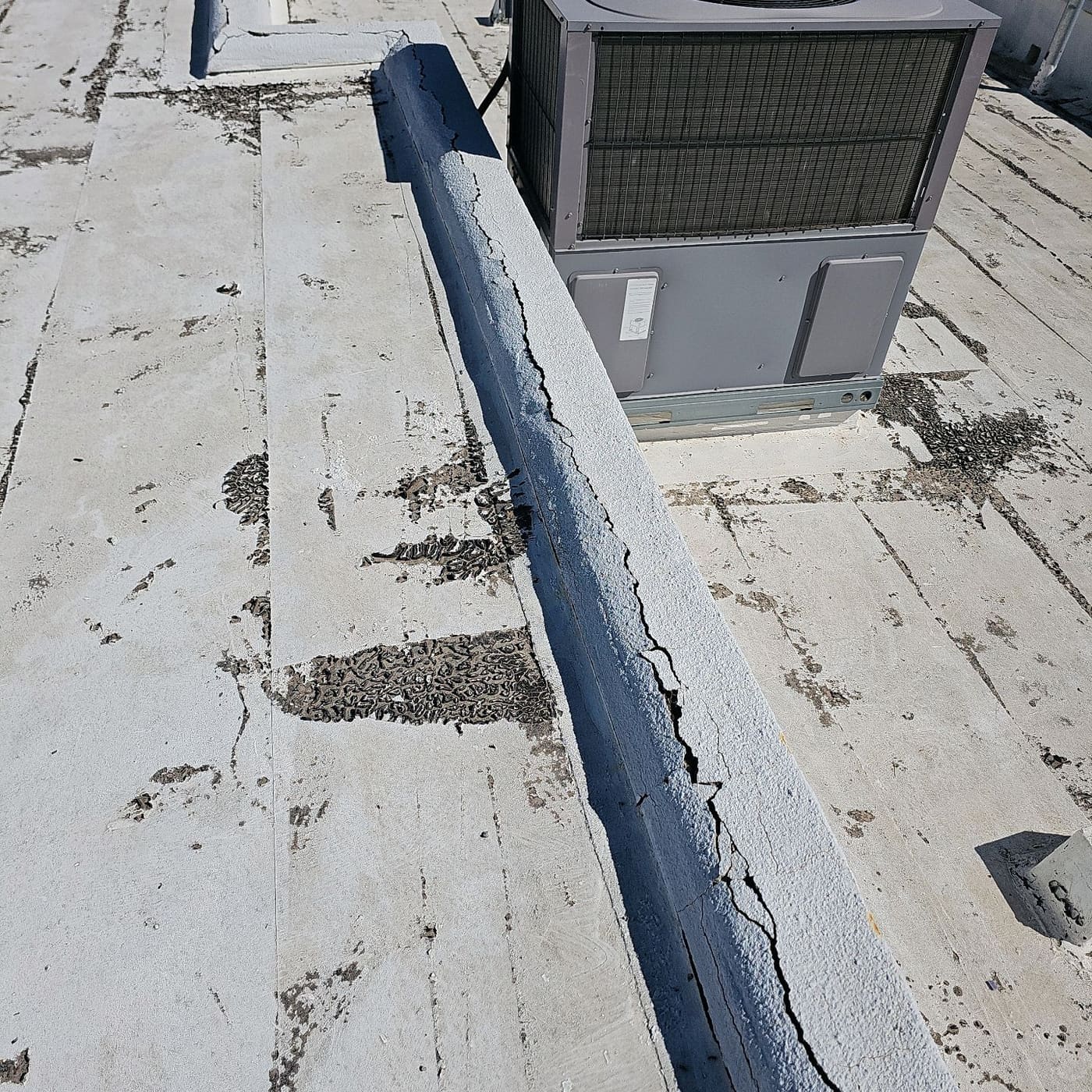
A cracked divider wall right next to a rooftop AC unit. Equipment, curbs, and low walls all interrupt drainage and add seams that need to stay sealed. Inspector Pros, September 11, 2026.
Signs Inside the House
You do not have to get on the roof to see evidence of a parapet or scupper leak. Look for: • Water stains or bubbling paint on ceilings near exterior walls, especially in corners. • Stains at the top of windows and doors on exterior walls. • Peeling paint or efflorescence (a white, chalky residue) on the inside of exterior walls. • Stucco on the outside that stays dark long after the rest of the wall has dried, or that sounds hollow when tapped.
On every inspection we pair what we see with infrared thermal imaging, included at no extra charge. Thermal imaging does not see through walls, but it can show temperature patterns consistent with moisture along a ceiling line or at the top of a wall. We confirm what we find with a moisture meter before it goes in the report.
Buying a Home With a Flat Roof and Parapets
A flat roof with parapets is not a reason to walk away. It is a reason to get a thorough inspection and ask good questions. When we find parapet or scupper issues on a buyer's inspection, the report documents where the water is getting in, what it has already affected, and whether a licensed roofing contractor should evaluate the roof before closing. Ask the seller how old the roof coating is, whether the roof has ever been re-coated or replaced, and whether there have been any leak repairs or insurance claims.
If you are selling, a pre-listing inspection lets you find and fix these issues on your own schedule, before a buyer's inspector finds them during your option period. Already own the home? A home maintenance inspection after monsoon season is a good way to catch parapet cracks before next summer.
Simple Maintenance That Prevents Most Parapet Leaks
Most of the leaks we find could have been prevented with basic upkeep: • Clear every scupper before monsoon season starts, and again after big storms. • Have the roof coating inspected and re-coated on the schedule the manufacturer or roofer recommends. • Seal cracks on the top and inside face of parapet walls as soon as they appear. • Keep the flashing and sealant around roof-mounted coolers and HVAC equipment in good shape. • Extend short canale spouts so water lands away from the wall and the foundation.
Only go on your roof if it is safe to do so. Flat roofs can still be slick, and parapet edges are a fall hazard. When in doubt, call a qualified roofing contractor.
Inspector Pros inspects homes across El Paso TX, Las Cruces NM, and all surrounding communities, 7 days a week. We walk every roof that is safely accessible and include thermal imaging on every inspection at no extra charge. Call or text (915) 209-2332, or schedule online here.
Frequently Asked Questions
Why does my flat roof only leak during monsoon season?
Most of El Paso's annual rain falls in a few heavy summer storms. Small cracks in a parapet cap, a gap at the roof-to-wall flashing, or a partially clogged scupper may never show a problem during light rain, but a heavy storm pushes enough water to find those openings. Leaks that only appear during big storms usually point to the edges of the roof rather than the middle.
What is the difference between a scupper and a canale?
A scupper is the drain opening through the parapet wall of a flat roof. A canale is the spout, often metal, clay, or wood, attached at the scupper on Pueblo and Territorial style homes to carry water away from the wall. Because parapets surround the roof, scuppers are often the only path for water to leave, so keeping them clear and well sealed is critical.
Are parapet wall cracks a serious problem?
Hairline cracks are common in stucco, but cracks on the top or inside face of a parapet let water directly into the wall assembly. Left alone, that water can damage framing, insulation, and interior finishes. Any cracking on a parapet should be evaluated and sealed, and cracks with staining or damage below them should be looked at by a qualified contractor.
Does a home inspector check parapet walls and scuppers?
Yes. When the roof is safely accessible, Inspector Pros walks it and inspects the parapet tops, the inside faces, the roof-to-wall flashing, the scuppers, and evidence of ponding. We also look for related signs inside the home and use thermal imaging to help identify patterns consistent with moisture.
Why does water pool on the flat roof of my new home?
On some new construction, the scupper opening in the parapet is installed above the roof's drainage plane, so water has to build up on the roof before it can reach the opening and drain. Water can also pool if the roof does not have enough slope toward the scuppers. If you see pooling or sediment rings near a scupper on a new home, document it and have it evaluated while the builder warranty is still in effect.
How can I tell if a flat roof has ponding water when it is not raining?
Standing water leaves dried rings of dirt and sediment on the roof surface after it evaporates. Low spots near scuppers, cracked or blistered coating, and debris collected in one area are also signs that water has been sitting on the roof longer than it should.
Should I buy a house with a flat roof in El Paso?
Flat roofs are common and practical in El Paso and can perform well for many years when they are maintained. The key is knowing the condition and age of the roof coating, the drainage, and the parapet walls before you buy. A thorough home inspection gives you that information so you can negotiate repairs or plan for maintenance.